
NHBC Standards for Timber Framed Homes
If you've recently purchased a timber framed new build home and are experiencing unexplained issues, from damp patches appearing on walls to mysterious draughts or cracking around windows and doors, you're not alone. Many of these problems stem from construction that doesn't fully comply with the industry standards that should govern how your home was built.
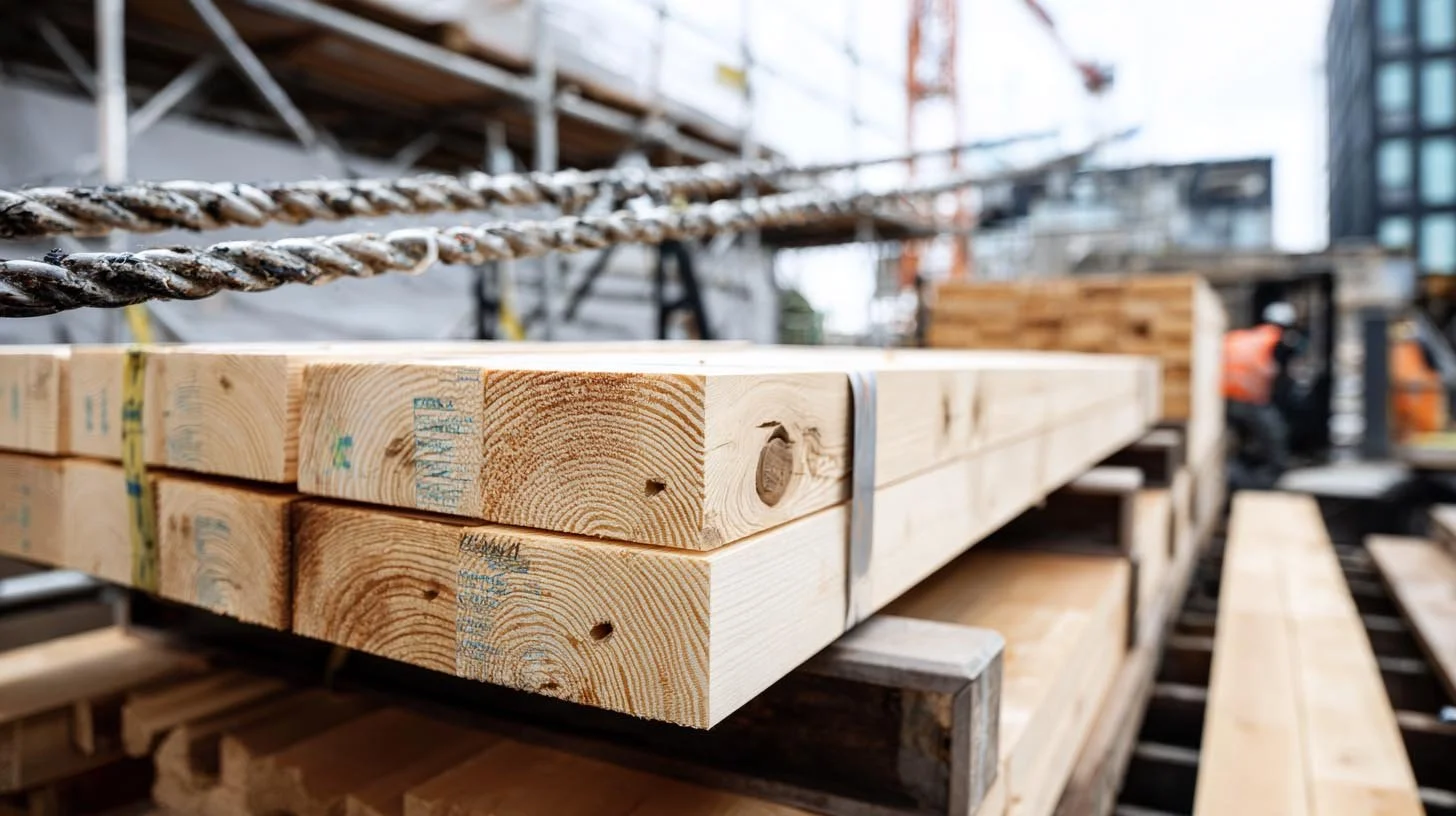
The National House Building Council (NHBC) Standards serve as the benchmark for quality and performance in new home construction across the UK. For timber framed properties, Chapter 6.2 of these standards provides comprehensive technical guidance that builders must follow to ensure homes are constructed safely, durably, and in compliance with building regulations. Understanding what these standards require can be invaluable when you're trying to work out whether the issues you're experiencing are simply "settling" or something more serious that your builder should address.
Why Timber Frame Construction Matters
Timber frame construction has become increasingly popular in the UK housing market, and for good reason. These homes offer excellent sustainability credentials, can be built more quickly than traditional masonry construction, and provide outstanding thermal performance when constructed correctly. However, the phrase "when constructed correctly" is crucial. The proper design and construction of timber frame walls is critical to prevent a range of issues including moisture ingress, movement problems, fire safety concerns, and inadequate insulation performance.
Many homeowners don't realise that their new home's timber frame is doing far more than simply holding up the roof. It's a carefully engineered system that must manage moisture, accommodate natural timber movement, resist fire, maintain thermal efficiency, and support loads safely. When any aspect of this system isn't constructed according to NHBC standards, problems can develop that affect your comfort, safety, and potentially the long-term value of your property.
What Chapter 6.2 Covers
The NHBC Standards Chapter 6.2 applies to timber framed homes up to seven storeys high, substantially timber framed properties, and timber wall panels. The chapter establishes clear requirements across multiple critical areas that builders must follow during construction.
Load-bearing walls form the backbone of your home's timber frame system. The standards provide detailed requirements for how these walls must be constructed to support and transfer loads to foundations safely and without undue movement. This includes specifications for the timber elements themselves, how panels join together, the positioning of sole plates (the bottom horizontal members that sit on the foundation), and how everything should be packed and fixed in place. Individual timber studs should have a minimum width of 38mm and maximum spacing of 600mm, unless additional support is provided. When you see cracks appearing in internal walls or notice that doors are sticking in their frames, these issues might indicate problems with how the load-bearing walls were constructed or fixed.
Protection from moisture represents one of the most critical aspects of timber frame construction. The chapter outlines extensive requirements for cavity construction, drainage, ventilation, and the proper installation of damp-proof courses and cavity trays. A drained and vented cavity should be provided between the external cladding and the timber frame sheathing to reduce the risk of rain penetration reaching the timber elements. For masonry cladding, a minimum 50mm nominal cavity width is required. If you're experiencing damp patches, musty odours, or seeing signs of mould growth, these could indicate that the moisture protection measures weren't installed correctly or that the cavity isn't draining and ventilating as it should.
Differential movement is a technical term that describes something quite simple: timber naturally shrinks as it dries out, causing the overall height of a timber frame to reduce over time. This is normal and expected, but your home should be designed and built to accommodate this movement without causing problems. The standards provide detailed guidance on accommodating differential movement between the timber frame and other building elements such as masonry cladding, door and window openings, balconies, and service entries. Movement joints should be designed with adequate gaps and compressible fillers. When homeowners see cracking around windows, gaps appearing between different materials, or doors that become increasingly difficult to close, differential movement that wasn't properly accommodated is often the culprit.
Fire resistance requirements specify how timber walls and panels should control and resist the spread of fire and smoke. This includes guidance on cavity barriers (which prevent fire spreading through hidden cavities), fire-stopping measures, how services like pipes and cables should penetrate fire-resistant elements, and ensuring adequate fire resistance of the wall or panel in accordance with Building Regulations. While fire safety measures are largely hidden from view once your home is completed, they're absolutely critical for protecting your family.
Breather membranes and air barriers might sound technical, but they perform essential functions. Breather membranes protect the timber frame sheathing from moisture while allowing water vapour from within the frame to pass into the cavity where it can escape. Air and vapour control layers restrict the passage of air and water vapour from within your home into the timber frame itself. When these elements aren't installed correctly, you might experience condensation issues, reduced energy efficiency, or in serious cases, hidden moisture problems within the timber frame that can lead to decay.
Insulation must be correctly installed to provide suitable thermal performance. The standards provide guidance on different insulation types and installation methods, whether placed within the timber stud void, on the external face of the frame, or on the inside face. If your heating bills seem surprisingly high, you feel draughts in certain areas, or some rooms are significantly colder than others, poor insulation installation might be to blame.
The Detailed Technical Requirements
Beyond these major areas, Chapter 6.2 includes sixteen detailed subchapters that address everything from the types of nails and staples that should be used (they must be adequately corrosion-resistant) to the specific requirements for wall ties that connect masonry cladding to the timber frame, the characteristics required for sheathing materials, and how services should penetrate through the frame.
The standards require that designs and specifications be produced in an understandable format with all relevant information distributed to appropriate personnel. Key documents should include complete drawings, materials specifications, cavity barrier positions, fixing schedules, and manufacturers' recommendations.
The design of timber frame superstructures must be adequately checked by qualified professionals. Homes with timber frame superstructures require certification confirming that the design has been reviewed by an NHBC-approved timber frame certifier, typically a qualified civil engineer with at least three years of timber frame construction experience. This certification requirement provides an important safeguard, but only if the certified design is then followed correctly during construction.
Common Problems and What They Might Indicate
Many issues that homeowners experience in timber framed new builds can be traced back to specific failures to comply with NHBC standards. Damp patches or staining on internal walls might indicate problems with the breather membrane installation, inadequate cavity drainage, or missing damp-proof courses. Draughts and cold spots often result from poorly installed insulation or inadequate air and vapour control layers. Cracking around windows, doors, and at junctions between different materials frequently indicates that differential movement wasn't properly accommodated during design or construction. Sticking doors or visible distortion might suggest issues with how the timber frame was erected or fixed to the foundations.
The challenge for homeowners is that many of these issues aren't immediately visible when you first move in. Some problems only become apparent over time as the timber dries and shrinks, as seasonal weather patterns test the weather resistance of the building envelope, or as the thermal performance proves inadequate during the first winter. This is precisely why professional snagging inspections are so valuable, particularly when conducted before completion or soon after moving in.
How Brickkickers Can Help
At Brickkickers, we've been providing professional snagging inspections for nearly 20 years, and we understand exactly what to look for in timber framed homes. Our nationwide network of experienced inspectors includes professionals with in-depth knowledge of timber frame construction and the NHBC Standards that should govern it. We know where problems typically occur, what signs might indicate hidden defects, and how to identify issues that might not be immediately apparent to homeowners.
Our inspections cover both the interior and exterior of your property, examining everything from the quality of external cladding installation to the effectiveness of ventilation measures, from the adequacy of movement allowances around openings to the quality of insulation installation. We can use thermal imaging in our inspections, which can reveal issues such as heat leaks from gaps in insulation, missing insulation in cavity walls, and cold spots that indicate moisture problems or inadequate thermal bridging details.
When we identify defects, we provide you with an in-depth, easy-to-understand report complete with detailed photographs. This report becomes a critical tool for you to present to your builder, prompting them to rectify faults promptly and effectively. Our reports are totally independent and we inspect for quality against NHBC, LABC, Premier, Advantage, Build Zone, Global, Checkmate, BLP and all other warranty providers.
Your Rights and Responsibilities
It's important to understand that whilst the NHBC Standards set out comprehensive technical requirements, the extent to which defects are addressed depends on your builder's willingness to act and your ability to demonstrate that issues exist. This is where having a professional, independent snagging report becomes invaluable. Our reports provide clear evidence of defects, reference the relevant standards where appropriate, and give you the documentation you need to make effective representations to your builder.
Remember that new homes typically come with a ten-year warranty. The first two years cover issues with finishes and other non-building defects, whilst more serious building defects are covered for the full warranty period. Time limits matter, which is why identifying and reporting problems early is so important. Even if you've been living in your home for a year or more, you may still be within the crucial two-year warranty period for many types of defects.
Taking Action
If you're experiencing issues with your timber framed home, or if you simply want peace of mind that your new build has been constructed to the required standards, contact Brickkickers today. Our experienced inspectors can provide an independent assessment of your property, identify any defects or areas of concern, and provide you with the detailed report you need to communicate effectively with your developer.
Our data shows that the average new home has in excess of 140 defects, many of which you can see clearly but many more that only an expert can spot. Don't wait until problems become serious or until you're outside your warranty period. With nearly 20 years of experience in new build snagging services and a nationwide network of qualified construction professionals, Brickkickers has the expertise to help ensure you get the quality of home that you've paid for.