

What Is Snagging?
Snagging is the process of inspecting a newly built home to find and record the defects, unfinished work and quality faults that the builder should put right.
If you are buying a new build house in the UK, understanding snagging is one of the most valuable things you can do before you pick up the keys, because a professional inspection gives you a documented list of everything that needs fixing while the developer is still responsible for the cost.
What Is a Snag?
A snag is any part of your new home that has been built, fitted or finished below the standard you are entitled to expect, or that has been left incomplete or damaged.
Snags range from small cosmetic blemishes through to faults that point to a more serious underlying problem.
Most snags are cosmetic and quick to fix, but some matter far more than they first appear. A poorly fitted kitchen unit or bathroom can hide plumbing that leaks over time, and cracking can occasionally indicate a fault that needs proper investigation. A good snagging inspection separates the trivial from the significant and explains why each item matters.
Common snags include paint splashes, uneven or patchy paintwork and scuffed skirting, scratches on windows, worktops and sanitaryware, doors and windows that do not close smoothly or are poorly aligned, misaligned or loose fixtures and fittings, cracks in walls or ceilings, and issues with plumbing, drainage, heating and electrical installations.
What Does Snagging Mean?
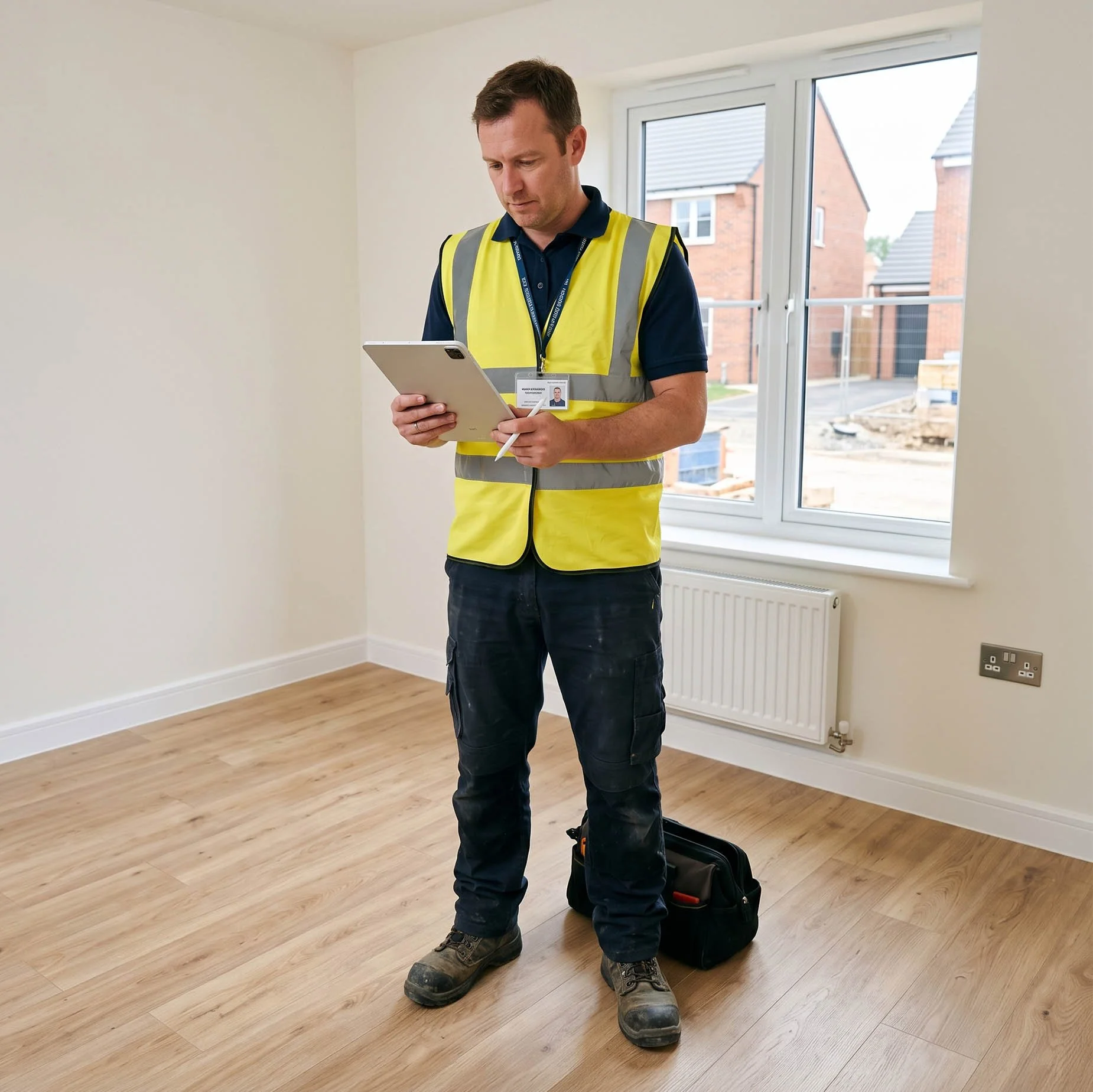
In modern UK house building, snagging means the systematic checking of a finished or nearly finished property to compile a list of faults, known as a "snag list", for the builder to correct. In the United States the same process is called a "punch list", but in Britain snagging and the snag list are the standard terms.
Snagging is a quality and finish check. It is not the same as a full building survey that assesses the fabric, foundations and load-bearing elements of an older property, and it is not a mortgage valuation.
What Is a Snagging Inspection?
A snagging inspection, sometimes called a snagging survey, is a detailed, independent examination of your new build carried out by an experienced inspector who checks the property room by room, inside and out.
The inspector assesses the quality of workmanship and finish against recognised standards and warranty provider tolerances, and produces a clear, photographic report you can hand to your developer so the faults can be rectified.
Our inspectors examine the whole property, including areas most buyers would never think to check, and thermal imaging is included as standard in our reports to help reveal issues that are not visible to the naked eye, such as gaps in insulation and heat loss.
The report is written so that it can be sent straight to the developer's customer care team, giving you documented evidence and real leverage. You can see the level of detail we provide in our sample snagging reports, and full pricing on our fees page.
Quality Assurance: It ensures that your new home meets the standards you expect and deserve.
Safety: Some snags can pose safety risks if left unaddressed. Our inspections help identify these potential hazards early.
Cost Savings: By catching issues early, you can avoid more expensive repairs down the line.
Peace of Mind: Knowing that your home has been thoroughly inspected gives you confidence in your investment.
Leverage with Builders: A professional snagging report provides you with documented evidence to ensure builders address any issues promptly.
Standard Snagging or a Pre-Completion Inspection?
There are two main ways to have your new home inspected, and the right one depends on your timing. A pre-completion inspection, or PCI, takes place before you legally complete, and a standard snagging inspection takes place once you have moved in.
Standard Snagging Inspections
Our standard snagging inspections are our most popular service and the most thorough. Carried out after completion, they give the inspector unrestricted access and the time to check every element of your home in depth, with thermal imaging included as standard.
PCI Snagging Inspections
Our NHQB pre-completion snagging inspections are carried out before you legally complete, for buyers whose developers allow access under the New Homes Quality Code. They follow the official pre-completion checklist to flag faults before you take the keys.
Intrusive Building Surveys
Our customised intrusive building surveys are for properties that call for deeper investigation, such as persistent cold areas or suspected hidden faults. They may involve carefully opening up parts of the home to examine elements a standard inspection cannot reach.
How Many Snags Does an Average New Build Have?
More than you would expect. In a Coventry University research report, "An investigation of finishing quality in new housing", researcher Terry Williams sampled 32 properties containing 4,523 defects, an average of 141 defects per property, with at least one breach of the building regulations in each home. Of those defects, 4% posed a risk to health and safety and 18% compromised the integrity of the building. New homes are hand-built outdoors by many different trades to tight deadlines, so faults are common even on well-run sites.
A property management firm Warwick Estates, analysing data across new homes sold in 2021, found an average of 157 snagging issues per new build home. Its chief executive Bethan Griffiths commented, "An average snagging list of 157 defects may sound unbelievable but that really is the extent of the issues found by many new-build homebuyers."
Data from the industry's own research agrees that faults are near universal: the Home Builders Federation's National New Homes Customer Satisfaction Survey published in March 2025 found that 93.7% of new build buyers reported problems to their builder since moving in, and more than a quarter reported over 15 snags.
The message is the same. A brand new home is very rarely a flawless one, which is why an independent inspection is so worthwhile.
What Is a Snagging List?
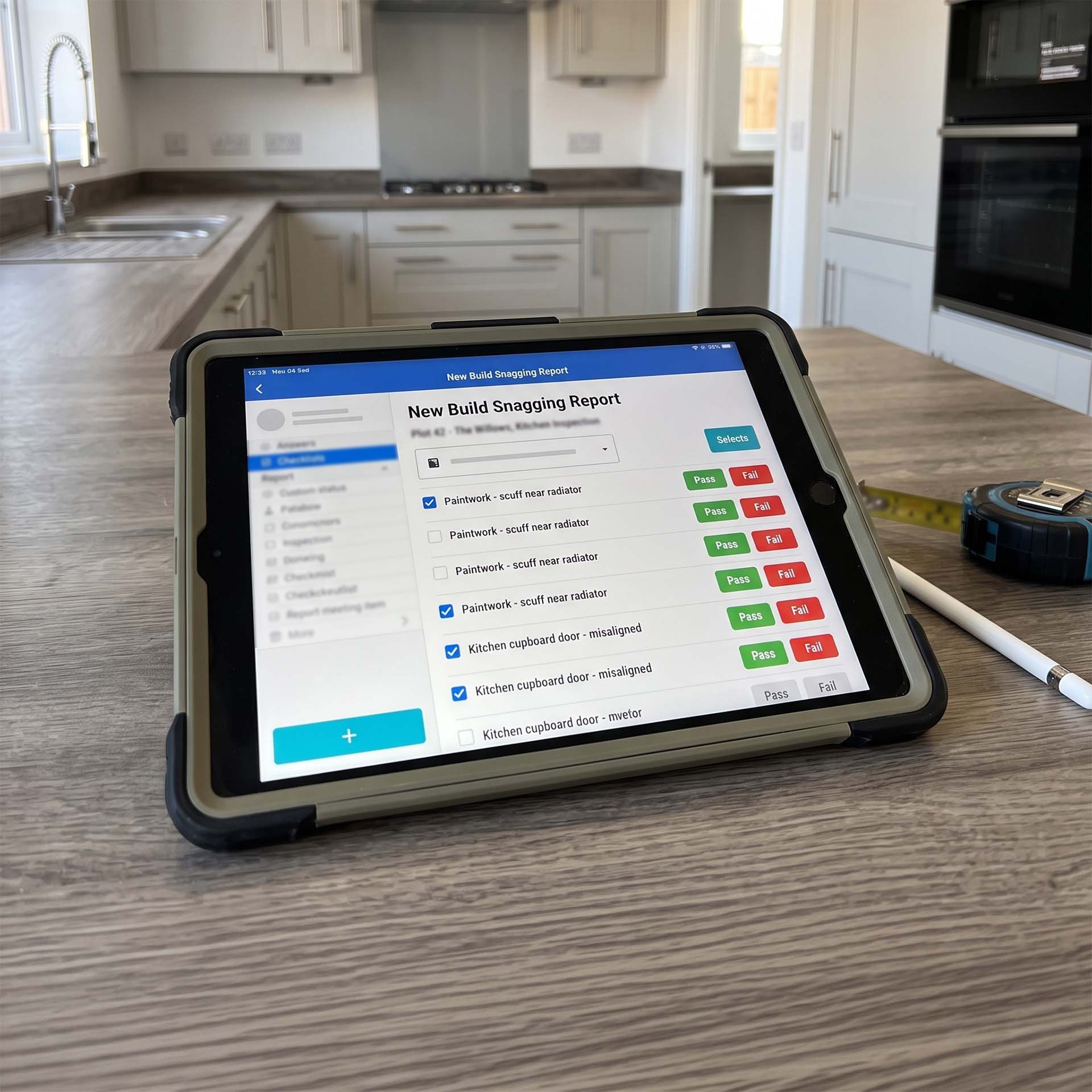
A snagging list is the written record of every defect found during the inspection. A professional snagging list describes each fault, shows its location, includes photographs and explains what the builder needs to do. It becomes the working document between you and your developer, and a valuable record if any dispute arises later.
As the buyer of a new build, compiling the snagging list is your responsibility. You can attempt it yourself, but unless you work in the trade you are likely to miss the faults that matter most. The average homeowner finds only 20 to 30 snags on their own, while a professional snagging inspector typically identifies 150 or more, and a professionally produced report carries far more weight with a developer than an emailed homeowner list.
When Should You Book a Snagging Inspection?
Timing matters. The best time to snag is before you legally complete if your developer allows access, or as soon as possible after you move in.
Under the New Homes Quality Code, developers registered with the New Homes Quality Board must give you the opportunity to have a pre-completion inspection carried out shortly before completion, which gives the builder a window to fix faults before you take possession.
If a pre-completion inspection is not possible, book your standard snagging inspection as soon as you have the keys, ideally within the first couple of weeks, before your belongings are in place.
You can also snag later in your ownership. Many buyers arrange a further inspection before the two-year builder responsibility period ends, to catch anything that has emerged with use and settlement, so it is fixed at the developer's cost rather than your own.
What Protection Do New Build Buyers Have?
Over 90% of new homebuyers experience defects in their new home, so the protections that come with a new build matter.
Most new homes in the UK come with a ten-year warranty from a recognised provider, and NHBC's Buildmark policy alone covers more than 70% of newly built homes in England and Wales.
Warranty providers include the NHBC, LABC, Premier Guarantee, Advantage, Build-Zone, Global Home Warranties, Checkmate and BLP, among others. At Brickkickers we inspect for quality against the standards of all the major warranty providers.
These warranties are typically structured in two parts. For the first two years, the builder is responsible for putting right defects you report to them. After that, the provider's insurance covers damage caused by faults in defined parts of the home, such as the foundations and fabric, up to the end of the ten-year period.
It is important to understand that the two-year builder period is when the widest range of faults, including cosmetic ones, will be fixed free of charge, which is exactly why a thorough snagging list early on is so valuable.
The New Homes Quality Board and its New Homes Quality Code add a further layer of protection, including the right to a pre-completion inspection and access to the New Homes Ombudsman if a developer does not put things right.
Snagging Is Not the Same as a Full Structural Building Survey
It is a common misunderstanding that a snagging inspection is a survey of the building's structural condition. It is not.
A snagging inspection focuses on the quality of finish, workmanship, completeness and compliance of a brand new home, and produces a list of items the developer should fix. It does not value the property, and it is not the same as a full survey that assesses the condition and fabric of an older or non-standard property to help you decide whether to buy.
For a new build the two are not competing choices. You have already decided to buy, so a snagging inspection is usually the right tool to make sure your home is finished to the standard you have paid for. If a property needs deeper investigation than a standard inspection allows, that is where our customised intrusive building surveys come in.
Why Choose Brickkickers?
Established in 2004, Brickkickers has over two decades of experience in new build snagging, delivered through a national network of construction and property professionals.
Our reports are independent of any developer, thermal imaging is included as standard, and we inspect against the standards of the main warranty providers. We work for homeowners, landlords and investors, and we support you throughout, including help communicating with your builder.
To protect your new home, book your inspection now, or call us on 0845 226 6036 or email info@brickkickers.co.uk.
DIY Snagging
You can carry out your own snagging with a checklist, a torch, a spirit level and a socket tester, and it is better than doing nothing. The limitation is knowledge.
Many of the faults that carry real cost, such as compliance issues, heat loss, poorly sealed areas and installation faults, are not obvious without inspection experience and equipment. A professional inspection pays for itself many times over when the defects it finds are fixed by the developer at no cost to you. Given that a new home is likely the largest purchase you will ever make, an independent inspection is a small, sensible investment.