
Are Your New Build Stairs Safe? A Guide to NHBC Requirements
When you're buying a new build home, staircases might not be the first thing that springs to mind during your viewing. Yet they're one of the most frequently used elements of your property and must meet rigorous safety standards. Understanding what the NHBC (National House Building Council) requires for staircases can help you spot potential issues before they become problems.
The NHBC Standards Chapter 6.6 sets out comprehensive technical requirements for staircases in new homes. These aren't arbitrary rules, they're designed to ensure your stairs are safe, durable and fit for purpose. Given that the average new home contains over 140 defects according to research by Coventry University, knowing what to look for can save you considerable hassle after moving in.
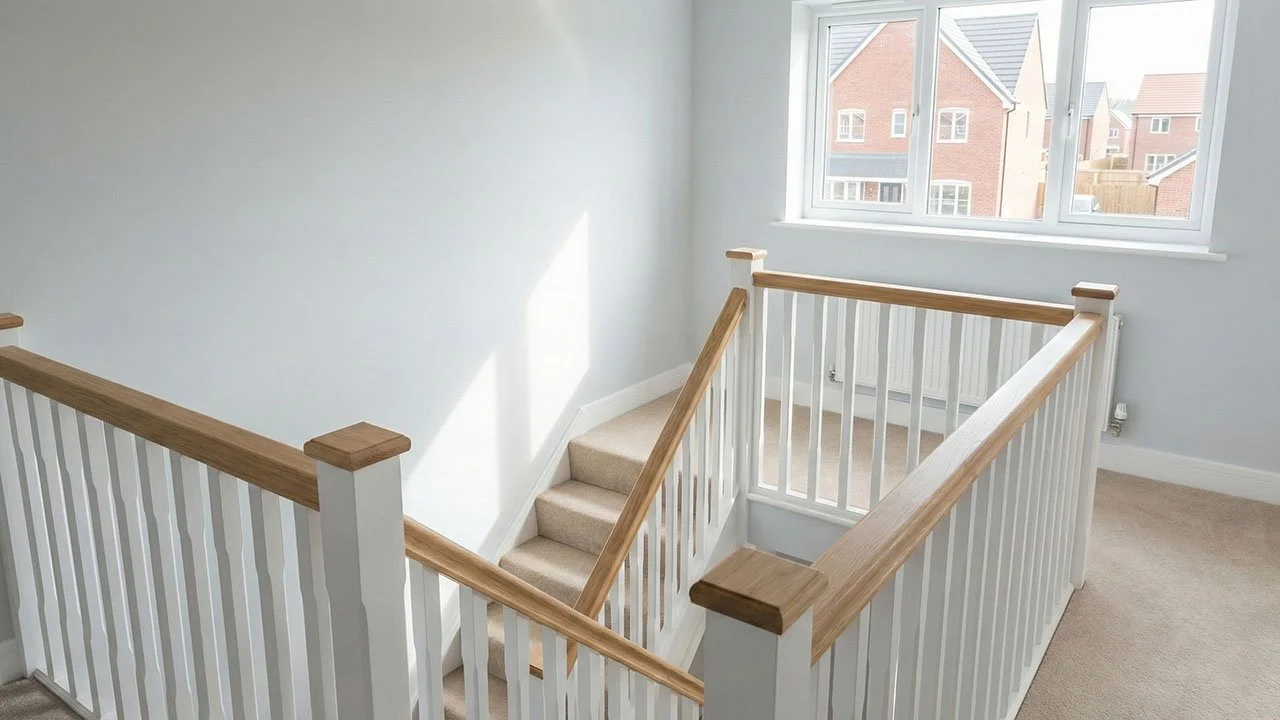
Key Requirements
The NHBC standards cover everything from the design and construction of stairs to their protection during the building process. One of the most important aspects is ensuring that all risers (the vertical part of each step) are equal in height. This might sound obvious, but inconsistent riser heights are a common defect that can create a tripping hazard. The standards specify that floor finishes and screeds must be accounted for, though a reduction in the bottom rise of up to 12mm is considered acceptable.
Headroom and width are carefully regulated to ensure comfortable and safe passage. Before your staircase is installed, the floor opening should be checked both from the plans and on site to verify it's the correct size. Insufficient headroom is not only uncomfortable, it fails to meet building regulations and can affect the value of your property.
Handrails and Guarding
Handrails must provide a firm handhold throughout their entire length and maintain a minimum 25mm clearance from any wall surface. This clearance is essential, without it, you cannot grip the handrail properly in an emergency. The handrail should also be smooth, free from rough edges or protruding bracket heads, and ideally have rounded ends or returns to the wall to prevent clothing from snagging.
Guarding, which includes balustrading and balustrades, must be robust enough to prevent falls and designed to discourage climbing. Where guardrails are particularly long, the fixing method becomes critical. Newel posts should be specified for through-bolting to joists or alternative supports according to an engineered design, particularly where intermediate posts may be required to transfer horizontal forces effectively.
Material-Specific Considerations
The standards recognise that staircases can be constructed from timber, concrete, steel or proprietary systems, and each material has specific requirements.
For timber staircases, which are common in residential properties, the wall string must be fixed securely in accordance with manufacturer guidance or British Woodworking Federation standards. The top nosing should sit level with the floor decking and be screwed into the joist. All components including strings, treads, risers, newel posts and balustrading must be fixed securely, with particular attention paid to winders. The standards also require that timber stairs should only be installed once the building is weathertight, protecting them from moisture damage.
Concrete staircases, whether precast or cast in-situ, must be designed and manufactured to specific European standards. The construction process requires careful attention to ensure consistent rise and going, with proper reinforcement cover and appropriate striking times for formwork.
Steel staircases need protective coatings and must be installed within specific tolerance limits. The manufacturer's assembly instructions should be readily available and followed precisely.
Lighting and Safety Features
Adequate lighting is a mandatory requirement for all staircases. Artificial light sources should be controlled by two-way switching at both the top and bottom of the stairs, or alternatively, automatic light-sensitive controls may be used. This seemingly simple requirement is frequently overlooked during construction, yet it's crucial for safe use of the stairs, particularly in homes with elderly residents or young children.
Where glazing is located near staircases, special consideration is required. Any glass positioned where someone using the stairs could make contact must either be designed not to break or to break safely, in accordance with building regulations. This typically means using toughened or laminated glass in these locations.
Common Defects to Watch For
During a snagging inspection, experienced inspectors look for numerous potential issues. Uneven risers, inadequate handrail clearance, loose balustrading, insufficient lighting controls and damage to finishes are among the most common problems identified. Stairs that haven't been properly protected during construction often show scuff marks, dents or scratches that should have been prevented.
The NHBC standards specify that staircases should be protected during construction using timber strips, plywood or building paper. When stairs arrive on site, they should be stored on bearers and protected from the weather. These precautions aren't always followed rigorously, leading to damage that becomes apparent only after installation.
The Role of Professional Inspection
Given the technical nature of staircase requirements and the number of potential defects, having a professional snagging inspection is invaluable. At Brickkickers, our inspectors are trained to check that staircases comply with NHBC standards and building regulations. We examine everything from the consistency of risers to the adequacy of handrail fixings, the proper installation of guarding and the provision of appropriate lighting controls.
Our pre-completion inspections are particularly valuable because they identify issues before you complete on the property, giving you leverage to ensure the builder rectifies problems. Even if you've already moved in, a standard snagging inspection within the first two years can still result in remedial work being carried out under warranty terms.
What You Can Check Yourself
Whilst a professional inspection is recommended, there are some basic checks you can perform during viewings. Test the handrail along its full length to ensure it's securely fixed and provides a firm grip. Check that there's adequate clearance between the handrail and wall. Walk up and down the stairs, paying attention to whether any steps feel different in height. Examine the balustrading to ensure it doesn't wobble when you apply gentle pressure. Verify that light switches are present at both the top and bottom of the stairs.
Look for visible damage such as scratches, dents or marks on the treads, risers and balustrading. Check that newel posts are plumb (vertical) and that all components appear to be securely fixed. If the stairs are timber, examine them for splits, knocks or other damage. These simple checks can reveal obvious defects, though many issues require the trained eye of an experienced inspector to identify.
Making the Most of Your Warranty
New build homes typically come with a 10-year NHBC warranty, but this operates on a sliding scale. In the first two years, the builder is responsible for putting right defects in the home. Understanding what constitutes a defect according to NHBC standards puts you in a stronger position when requesting remedial work.
Brickkickers' independent reports are specifically crafted to reference NHBC standards and are accepted by all major warranty providers including NHBC, LABC, Premier Guarantee and others. This means builders take our reports seriously and are more likely to address identified issues promptly.
Your Next Steps
If you're in the process of buying a new build home, don't wait until after completion to think about snagging issues. Our pre-completion inspections, ideally conducted during the 10 to 14 day period before legal completion, give you the best opportunity to have defects rectified before you move in. For homes where you've already completed or purchased a property less than two years old, we can still help you identify issues that should be addressed under warranty.
Staircases are a critical safety feature in your home. They need to be built right, not just to meet regulations, but to ensure the safety and comfort of everyone who uses them for years to come. With nearly 20 years of experience and a nationwide network of qualified inspectors, Brickkickers provides the expertise you need to ensure your new home meets the standards you're paying for.
Contact us today on 0845 226 6036 or email info@brickkickers.co.uk to arrange your snagging inspection and gain peace of mind about your new home purchase.