
2026 NHBC Standards for Drives, Paths and Landscaping: What New Build Buyers Need to Know
Whilst most buyers focus on what's inside their new property, the external areas deserve just as much attention. That's where Chapter 10.2 of the NHBC Standards 2026 comes in, and understanding these requirements could save you considerable hassle down the line.
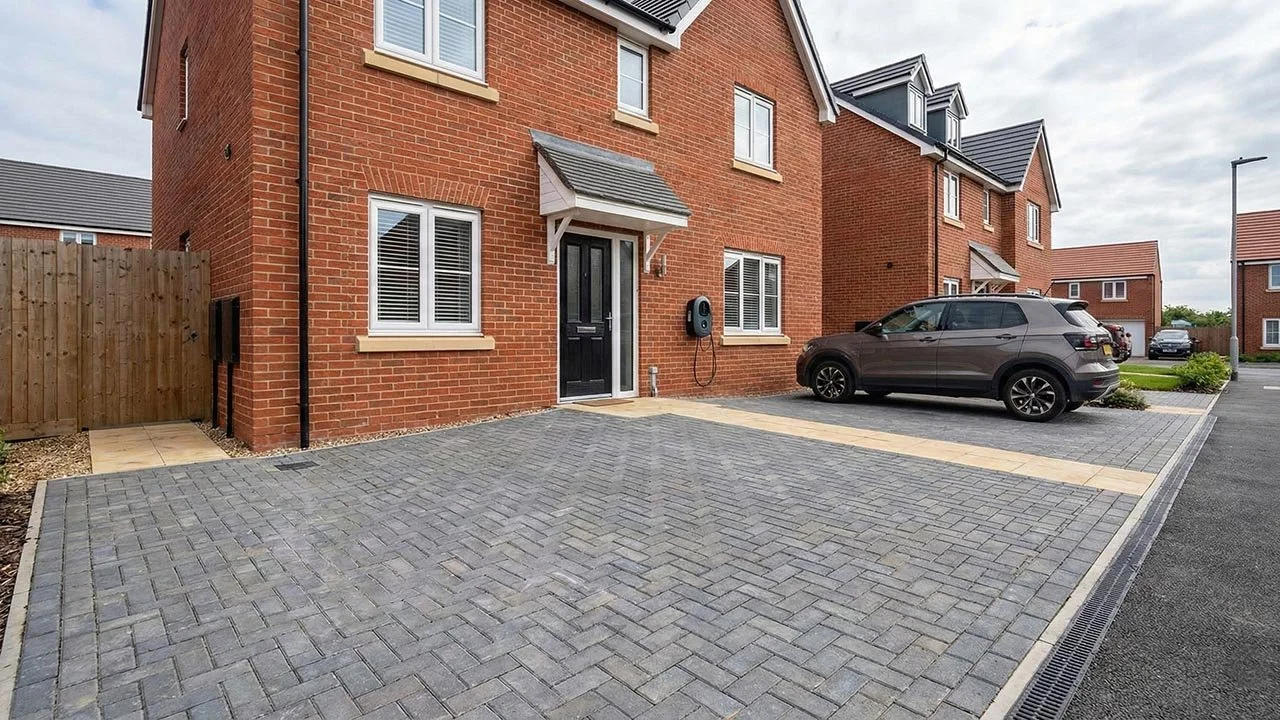
The NHBC (National House Building Council) sets the technical standards that most UK house builders must follow. Chapter 10.2 specifically addresses drives, paths and landscaping, covering everything from private driveways and car parking areas to garden preparation, retaining walls, and external decking. These are essential elements that affect your property's functionality, safety, and long-term value.
Research shows that the average new home has in excess of 140 defects, and a significant proportion of these occur in external areas. Poor drainage on a driveway, inadequately prepared garden soil, or improperly constructed retaining walls can lead to problems that are expensive and disruptive to fix later. The 2026 standards have been updated to reflect current best practice and include more stringent requirements than previous versions.
Key Areas to Watch
When you're inspecting your new build, particularly during a pre-completion snagging inspection, there are several critical aspects covered by these standards that deserve your attention.
Drainage and water management is perhaps the most crucial consideration. Your driveway and paths must be at least 150mm below the damp proof course (DPC) and should slope away from your home. The standards specify that paved areas need adequate falls and cross-falls to prevent water pooling, with surfaces requiring a minimum fall of 1:80. Poor drainage can lead to water ingress, damp problems, and ice formation in winter.
Garden preparation is another area where corners are sometimes cut. The standards require that construction rubbish and debris must be removed, old foundations and concrete bases cleared from within 450mm of the finished surface, and the subsoil properly decompacted to a minimum depth of 300mm. Simply rotavating the surface isn't sufficient. You should receive at least 100mm of suitable topsoil, and importantly, subsoil should never be placed over topsoil. Garden areas within 3m of your home must not be waterlogged, and those within 20m should be stable and provided with reasonable access.
Driveway construction varies depending on the expected vehicle use. The standards distinguish between private drives (for cars and light vehicles), shared drives (occasional commercial vehicles), and private roads (frequent commercial vehicle use). Each has specific requirements for sub-base thickness, materials, and construction methods. For instance, a typical private drive for cars requires a well-consolidated sub-base, the thickness of which depends on the California Bearing Ratio (CBR) of the ground beneath. Where the CBR is 5% or more, you'll need at least 150mm of sub-base, but if it's less than 5%, this increases to match specific requirements based on ground conditions.
Retaining walls and steps are subject to particularly important safety standards. Any retaining wall over 600mm high must be designed by an engineer, and guarding of at least 1,100mm height is required where people have access to the higher level and certain height criteria are met. Steps should have a maximum rise of 220mm and a minimum going of 220mm, and handrails are required where the total rise exceeds 600mm.
What's New in the 2026 Standards?
The 2026 version includes several updates and clarifications. There's greater emphasis on sustainable drainage systems (SuDS), with specific reference to CIRIA Report C753 for porous or permeable surfaces. The materials specifications have been updated to reference the latest British Standards and include more detailed requirements for different types of construction, from bituminous mixtures to block pavers and concrete.
The standards also now include more comprehensive guidance on thermal imaging for detecting insulation problems, something that Brickkickers has been incorporating into standard snagging reports for many years. This can identify heat loss from gaps in insulation, potentially saving you substantial amounts on heating bills.
Common Problems We Find
During our nearly 20 years of conducting snagging inspections, we've identified recurring issues with drives, paths and landscaping. Poor drainage leading to standing water or water running towards the property is remarkably common. We frequently find insufficient or poorly compacted sub-base material, which leads to sinking or cracking of driveways within the first few years. Garden areas often haven't been properly prepared, with construction debris left buried, inadequate topsoil depth, or heavily compacted subsoil that won't support healthy plant growth.
Retaining walls sometimes lack proper drainage provisions or haven't been designed to cope with the loads they're supporting. Paths may be too narrow to meet the minimum width requirements, or have gradients that are too steep. These aren't just aesthetic issues, they can affect your safety, your property's value, and lead to disputes with your builder if not identified and rectified early.
How Brickkickers Can Help
This is where professional snagging inspection becomes invaluable. Our inspectors are experienced construction professionals who know exactly what to look for when checking compliance with NHBC standards. We conduct thorough inspections of both interior and exterior elements of your property, using our unique snagging checklist refined over nearly two decades.
We offer both pre-completion and standard snagging inspections. A pre-completion inspection, carried out before legal completion, gives you maximum leverage with your builder to have issues rectified before you move in. However, we can also help if you've already moved in, as most warranties allow representations to be made to the builder for defects within the first two years.
Our inspections include thermal imaging as standard, which can reveal hidden problems with insulation and heat loss that aren't visible to the naked eye. We provide a detailed, photographic report that clearly documents any defects, making it straightforward to present these to your builder for rectification.
Taking Action
If you're approaching completion on a new build property, or have recently moved in, don't leave checking these critical external elements to chance. The NHBC standards are comprehensive, but they're only effective if builders actually comply with them, and if defects are identified and rectified promptly.
Understanding what you should expect from your new home's external works empowers you to hold your builder accountable. Whether it's ensuring your driveway won't sink in two years' time, your garden is actually capable of growing plants, or your retaining walls are safe and properly constructed, these details matter enormously to your long-term satisfaction with your property.
At Brickkickers, we've been helping homeowners navigate the complexities of new build quality for nearly 20 years. Our independent reports are compiled by qualified professionals and are recognised by all major warranty providers including NHBC. With our nationwide network of inspectors, we can provide expert snagging inspection services wherever your new build is located.
Don't wait until problems become apparent, by which time rectification may be more difficult or even disputed. Contact Brickkickers today on 0845 226 6036 or email info@brickkickers.co.uk to arrange your snagging inspection and ensure your new build meets the standards you're entitled to expect.