
Cracks in New Build Homes: A Guide for Homeowners
Finding cracks in your brand new home can be alarming. You've invested a significant sum of money into what should be a perfect property, and discovering fissures in your walls, ceilings or floors might leave you questioning whether something has gone seriously wrong.
The good news is that most cracking in buildings is entirely normal and nothing to worry about. However, some types of house cracking do warrant further investigation, and knowing the difference could save you considerable stress and expense in the long run.
At Brickkickers, we've been inspecting new build properties across the UK since 2004, and house movement cracks are among the most common concerns raised by our clients. This comprehensive guide will help you understand why cracks appear, which ones are harmless, and when you should seek professional advice.
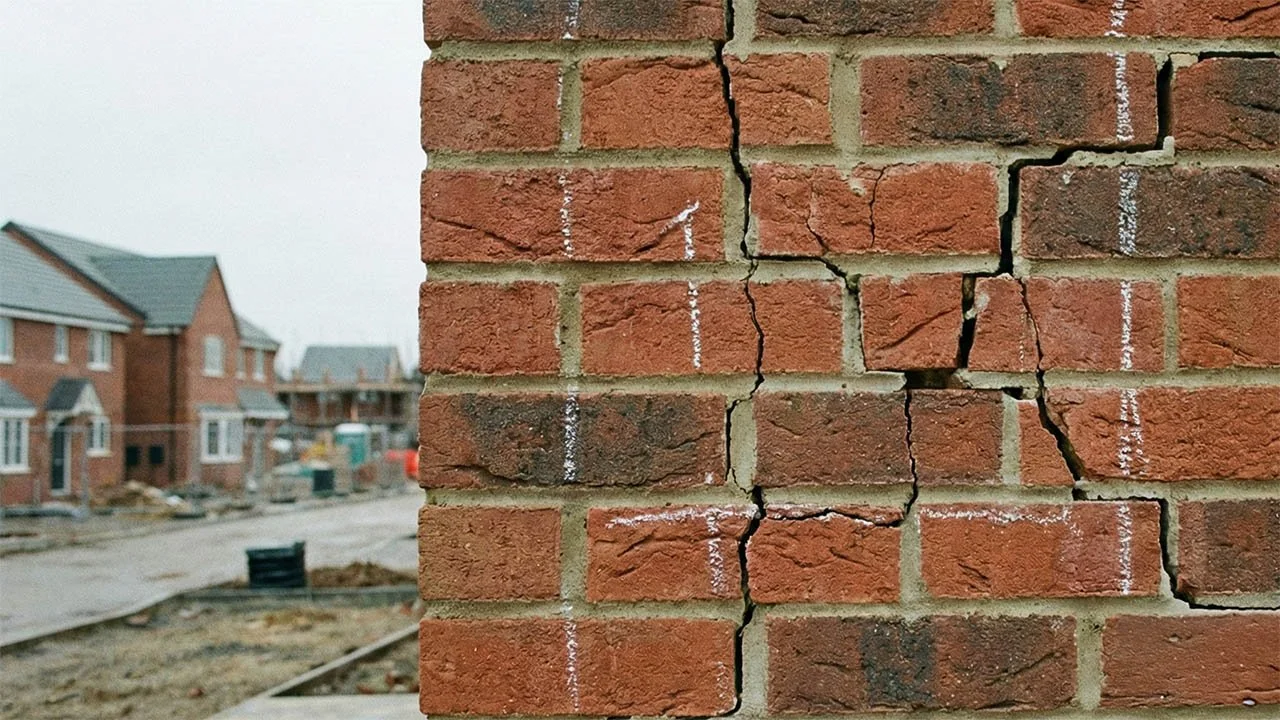
Why Do New Build Homes Develop Cracks?
It might seem counterintuitive that a newly constructed property would develop cracks, but the reality is that almost every home will experience some form of cracking at some point in its life. This applies regardless of how well designed or constructed the building may be. Understanding the causes can help put your mind at rest and enable you to make decisions about whether any action is needed.
Shrinkage During the Drying Out Period
One of the most common causes of cracking in new homes is shrinkage that occurs during the initial drying out period. Many of the materials used in modern construction, including mortar, plaster and concrete, contain substantial amounts of water when they are first applied. As your new home dries out over the weeks and months following completion, these materials naturally shrink, which can lead to minor cracks appearing in walls and floors.
Shrinkage cracks typically present as vertical or horizontal lines, often running along walls near the ceiling or close to the floor. These cracks are usually consistent in width, typically measuring less than 2mm across. They're a normal part of the settling process and are considered cosmetic rather than a cause for concern about your home's stability.
The drying out period can take several months, and during this time you may notice new cracks appearing or existing ones becoming slightly more visible. This is particularly common during the first winter, when central heating systems are used regularly and accelerate the drying process.
Thermal Movement and Seasonal Changes
Every building responds to changes in temperature, moisture levels and humidity throughout the year. This phenomenon, known as thermal movement, causes materials to expand and contract with the seasons. Because different building materials respond differently to these environmental changes, small movements can occur where different materials meet one another, leading to thermal movement cracks.
Thermal cracking in brickwork is particularly common because materials such as concrete blocks, reconstituted stone, mortar, render and concrete lintels are relatively brittle and less able to accommodate repeated expansion and contraction. You'll often find these cracks appearing where an external wall joins an internal plasterboard wall, or around window and door openings where concrete or steel lintels have been installed.
A crack between ceiling and wall is another frequently observed example of thermal movement. Where plasterboard sheets are joined together on ceilings, or where ceiling boards meet wall surfaces, the slight movements caused by temperature and humidity changes can create hairline cracks that may open and close throughout the year.
Changes in temperature and moisture can also affect timber components within your home. Skirting boards and architraves may develop small gaps at their joints and corners, and doors and windows might occasionally stick in their frames or swing open of their own accord. These are all normal responses to environmental conditions and rarely indicate any underlying problem.
Moisture Movement Within Materials
Whilst shrinkage relates specifically to the initial drying out of building materials, moisture movement is an ongoing process that affects homes throughout their lifespan. Water vapour is constantly being generated within your home through everyday activities such as breathing, showering, bathing, cooking, and drying clothes. Modern homes are designed to be energy efficient, which means they're built to minimise draughts and heat loss, but this also reduces the rate at which water vapour can escape.
Building materials can absorb this moisture from the air, causing them to expand. When humidity levels drop, whether due to warm external temperatures or the use of central heating, the materials dry out and contract again. This continuous cycle of wetting and drying can cause cracks to appear, typically presenting as vertical lines that may open and close as conditions change throughout the year. Like thermal movement cracks, these are usually less than 2mm wide and don't affect the soundness of your property.
Settlement in New Properties
Settlement occurs when the ground beneath a property compacts under the weight of the building above. This is a natural process that affects most new build homes to some degree, and it typically stabilises within the first few years following construction. Settlement cracks in new build properties can appear as vertical, horizontal or diagonal lines, and in floors they may follow irregular paths rather than straight lines.
New build settlement cracks are generally nothing to worry about provided they remain relatively narrow. Cracks measuring less than 2mm in width are unlikely to affect the stability or safety of your home, though you should monitor them for any signs of progression. Settlement cracks in new houses are particularly common during the first year or two of occupation, after which the ground typically reaches a stable state.
In rare cases, settlement can be more pronounced if the site was filled or levelled before construction and the ground wasn't properly compacted beforehand. However, this is uncommon, and most settlement is minor and temporary.
Subsidence and Heave
Whilst settlement involves the building itself pressing down on the ground beneath it, subsidence and heave relate to movement of the ground itself. These are less common but potentially more serious issues that warrant professional investigation.
Subsidence occurs when the ground beneath or near a property shrinks, causing the building to move downwards. Heave is the opposite phenomenon, where the ground swells and pushes the building upwards. Both conditions are most commonly associated with clay soils, which can shrink significantly during dry periods and swell when moisture levels increase.
Trees and large shrubs can exacerbate these problems because their roots draw moisture from the soil. Certain species, including elm, eucalyptus, oak, poplar, willow and some cypress varieties, are particularly thirsty and can affect ground conditions over a considerable distance from the tree itself.
Other potential causes of ground movement include defective drainage systems, weak ground conditions such as soft clays, loose sands or peat, and historical mining activity in the vicinity of the property.
NHBC subsidence claims represent a relatively small proportion of warranty claims, but if you suspect your property may be affected, it's important to seek professional advice promptly. Subsidence and heave cracks tend to have a distinctive appearance, being wide at one end and narrow at the other, which helps distinguish them from more benign types of cracking.
Identifying Different Types of Cracks
Understanding what type of crack you're dealing with is crucial in determining whether any action is needed. Here's what to look for when assessing cracking in your home.
Shrinkage cracks in walls are typically vertical or horizontal, running in straight lines and maintaining a consistent width along their length. They're most commonly found near ceiling level or close to the floor, and they usually measure less than 2mm across.
Thermal movement cracks share many characteristics with shrinkage cracks, being vertical and consistent in width. The key difference is that they may appear to open and close slightly as temperatures and humidity levels change throughout the year. You'll often find them at junctions between different materials or around window and door openings.
Settlement cracks in new build properties can run in any direction, including diagonally, and may vary in width along their length. However, provided they remain under 2mm wide, they're unlikely to indicate any significant problem with your home's foundations or overall stability.
Subsidence and heave cracks are characterised by their tapered appearance, being noticeably wider at one end than the other. They may also be visible both inside and outside the property, or run along or below the damp proof course. These types of cracks should always be investigated by a qualified professional.
What to Do When You Find a Crack
Discovering a crack in your new home can be worrying, but in most cases there's no need for alarm. Here's a practical approach to assessing and dealing with cracking.
If the crack measures 2mm or less in width, it's generally considered cosmetic and unlikely to affect your property's stability or safety. You can measure this using a ruler or tape measure, or as a quick reference, the edge of a one pound coin is approximately 3mm thick. These minor cracks can typically be repaired using appropriate filler, grout or sealant when you next redecorate.
It's worth noting that some cracks may reappear after repair, particularly if they're caused by thermal movement. This isn't necessarily cause for concern provided the crack isn't progressively widening over time. However, you should keep an eye on any cracks and watch for changes in their width, length or direction.
Taking photographs of cracks when you first notice them, with a ruler or coin placed alongside for scale, can help you monitor whether any changes occur over time. This documentation can also be useful if you later need to discuss the issue with your builder or warranty provider.
When to Seek Professional Advice
Whilst most cracks are harmless, certain characteristics should prompt you to seek professional assessment. You should contact your warranty provider or arrange a professional inspection if a crack exceeds 5mm in width at any point, appears wider at one end than the other, or is constantly more than 2mm wide along its entire length.
Diagonal or stepped cracks of any width deserve investigation, as do cracks that are visible both inside and outside the property. Any cracking that runs horizontally along the line of the damp proof course, or where the brickwork at corners above or below this level appears uneven, should be assessed promptly.
Pay attention to whether any cracking is accompanied by other symptoms, such as multiple doors or windows that have started sticking in their frames or swinging open when they previously functioned normally. These signs might indicate more significant movement within the building.
If a crack has noticeably widened or lengthened since you first observed it, this progression warrants professional evaluation even if the crack itself is relatively small.
How Brickkickers Can Help
At Brickkickers, our experienced inspectors are experts in identifying and documenting defects in new build properties, including various types of cracking. Our comprehensive snagging inspections cover both interior and exterior elements of your home, with detailed reports that you can present to your builder for rectification.
Our thermal imaging technology, included as standard in our inspections, can help identify underlying issues that might not be visible to the naked eye. Problems with insulation, heating systems and damp can all contribute to or be masked by surface cracking, and our thermal surveys can reveal these hidden defects.
For homeowners dealing with ongoing disputes about cracking or other defects, our customised and intrusive building surveys provide the detailed analysis needed to resolve complex issues. Whether you need evidence for negotiations with your builder, assistance with contractual disputes, or an independent assessment for mediation purposes, our team can provide the expert evaluation you need.
Minimising Cracking in Your New Home
Whilst some cracking is inevitable in any new property, there are steps you can take to minimise its extent and help your home settle comfortably.
Maintaining even temperatures throughout your home, including in rooms you don't frequently use, can reduce the stress on building materials caused by differential heating. When you first start using your central heating after the summer months, or in a brand new property, try to increase the temperature gradually rather than immediately setting it to maximum. This allows the building fabric to warm up and dry out at a measured pace.
Good ventilation is equally important during the drying out period. Opening windows regularly, even briefly during colder months, allows moisture to escape and helps the building materials reach their equilibrium state more smoothly. Leaving trickle vents in window frames open, even when the heating is on, can make a significant difference.
Be thoughtful about planting in your garden, particularly if you have clay soil. Trees and large shrubs can affect soil moisture levels over considerable distances, potentially contributing to ground movement. As a general rule, on clay soil, trees should be planted no closer to your home than three quarters of their expected mature height. Species that demand large amounts of water should be positioned even further away, at least one and a quarter times their mature height from the building.
Before removing or significantly pruning any mature trees, check with your local authority to ensure they're not protected by planning conditions, conservation area restrictions or tree preservation orders.
The Importance of Professional Snagging
Research conducted by Coventry University has shown that the average new build home contains in excess of 140 defects. Many of these are minor cosmetic issues, but others may be hidden problems that could cause significant difficulties if left unaddressed. Professional snagging inspections provide peace of mind by ensuring that defects are identified and documented before they become your responsibility to rectify.
Whether you're approaching legal completion on a new property or have recently moved into a new build home, a professional inspection can identify issues that might otherwise go unnoticed. Our inspectors know exactly what to look for and can distinguish between normal settling and genuine defects that your builder should address.
If you've noticed cracking in your new home and would like expert advice, or if you'd like to arrange a comprehensive snagging inspection, our team is here to help. With nearly two decades of experience in the industry and a nationwide network of qualified inspectors, Brickkickers provides the independent, professional service you need to ensure your new home meets the standards you're entitled to expect.
Contact us today to discuss your requirements or to request a callback from one of our team.