
Shared Ownership for New Build Buyers: What You Need to Know in 2026
Getting on the property ladder has never felt harder. House prices remain stubbornly high compared to average earnings, and for many first-time buyers, saving a deposit large enough to secure a mortgage on the open market feels like an impossible task.
It's no surprise that research consistently shows affordability and deposit-saving top the list of housing concerns among UK adults. For buyers of new build homes in particular, shared ownership has long been positioned as a lifeline, a way to get your foot on the ladder when full ownership is out of reach.
But the reality is more nuanced than the marketing suggests. In this guide, we'll walk through how shared ownership works in 2026, what schemes are currently available, which ones have come and gone, what reforms are on the horizon, and, crucially, what you need to watch out for before committing.
What Is Shared Ownership and How Does It Work?
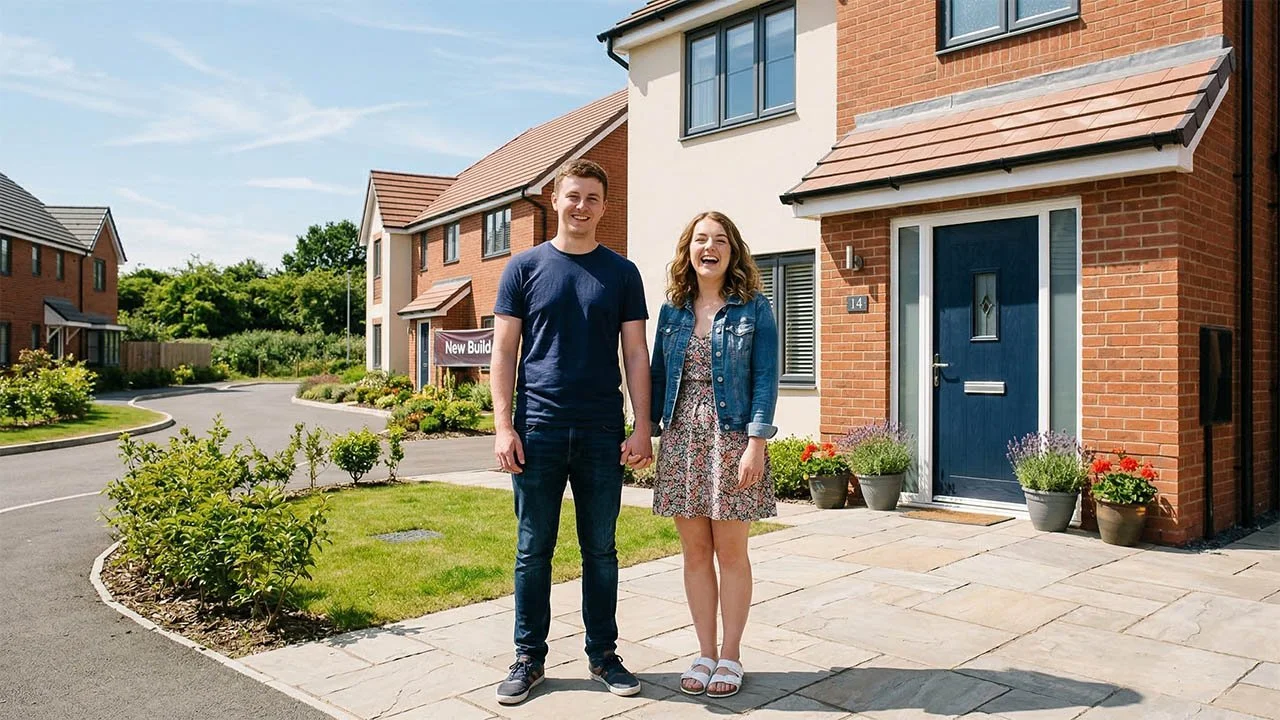
Shared ownership is a government-backed scheme that allows you to buy a share of a property, typically between 25% and 75% of its market value, while paying subsidised rent to a housing association on the portion you don't own. You take out a mortgage on the share you're buying and pay a deposit on that share, usually between 5% and 10%.
To be eligible, your household income must be below £80,000 per year, or £90,000 if you're buying in London. You'll also need to demonstrate that you can't afford to buy a home outright on the open market. The scheme is open to first-time buyers, people who used to own a home but can no longer afford one, and existing shared owners looking to move.
The rent you pay on the housing association's share is typically set at 2.75% of its value per year. So if you buy a 40% share of a £300,000 property, you'd pay rent on the remaining £180,000, which works out at roughly £412 per month. On top of this, you'll also pay your mortgage repayments, service charges, and potentially ground rent, depending on your lease.
It's worth noting that shared ownership properties are almost always leasehold, and most new build homes sold through the scheme will be flats, particularly in urban areas. This has significant implications for ongoing costs, which we'll return to later.
Staircasing: The Path to Full Ownership
One of the key selling points of shared ownership is the ability to increase your share over time through a process known as staircasing. As your financial circumstances improve, you can buy additional portions of the property from the housing association, reducing the rent you pay accordingly. Eventually, if you staircase to 100%, you own the property outright.
In theory, this is an elegant route to full ownership. In practice, it comes with complications. Each time you staircase, you'll need to pay for a professional valuation to determine the current market value of the property, and you'll also face legal fees and potentially remortgaging costs. Some housing associations limit the number of times you can staircase, for instance capping it at three occasions or only allowing a third staircase if it takes you to 100%.
The more significant issue is what happens to property values between your initial purchase and any subsequent staircasing. If the property has risen in value, you'll be paying the current market rate for the additional share, not the original price. This means that the total cost of staircasing to full ownership can end up being considerably more than if you'd been able to buy the property outright at the start. To take a simplified example: if you bought a 50% share of a property worth £300,000, paying £150,000 for your initial share, and then staircased to 100% fifteen years later when the property was worth £500,000, the second 50% would cost you £250,000. The housing association benefits from the uplift in value, while you end up paying £400,000 in total for a home that would have cost £300,000 had you bought it outright at the beginning.
The Old Model vs the New Model
Shared ownership has been around since 1980, but the scheme underwent significant reform in 2021 when the government introduced a new model as part of the Affordable Homes Programme running from 2021 to 2026. Understanding the differences between the old and new models matters, particularly if you're considering buying a resale shared ownership property that might still be on older lease terms.
Under the new model, several important changes were introduced. The minimum initial share was reduced from 25% to 10%, making it possible for buyers to enter the scheme with an even smaller stake. A 10-year initial repair period was brought in, during which the housing provider is responsible for the cost of essential repairs, up to a capped amount of £500 per year. A new gradual staircasing option allows buyers to purchase additional shares in increments as small as 1%, with reduced fees compared to the old 10% minimum. Lease terms on new properties were extended from the previous minimum of 99 years to 990 years, removing the risk of lease depreciation that has plagued many older shared ownership homes. Finally, shared owners gained more control over the resales process, with the option to take over the sale from the housing association after four weeks rather than waiting out the full eight-week nomination period.
These are meaningful improvements, but they only apply to properties delivered under the 2021-2026 Affordable Homes Programme. Properties sold under the earlier programme (2016-2023) remain on their original, less favourable lease terms. This has raised concerns about the emergence of a two-tier market, where older shared ownership homes become harder to sell because buyers, understandably, prefer the protections offered by the new model lease. The cross-party Levelling Up, Housing and Communities (LUHC) Committee has flagged this as a significant risk, recommending that the government explore how to extend the improvements to older properties.
Schemes That Have Come and Gone
Shared ownership is not the only route that has been available to new build buyers over the years, and it's worth understanding the broader landscape of schemes that have been introduced and subsequently wound down.
The most notable departure is Help to Buy, the equity loan scheme that ran in various forms from 2013 until it closed to new applicants in October 2022, with the final completions taking place by March 2023. Under Help to Buy, the government offered first-time buyers an interest-free equity loan of up to 20% of a new build property's value (40% in London), allowing purchases with just a 5% deposit. Between 2013 and 2023, approximately 328,000 first-time buyers used the scheme, with total equity loans worth around £24.7 billion.
Help to Buy was enormously popular but also attracted significant criticism. Detractors argued it inflated house prices by artificially stimulating demand for new builds, and that regional price caps limited its usefulness in more expensive areas. The equity loan was interest-free for the first five years but attracted fees thereafter, and because the loan was pegged to the property's value rather than being a fixed sum, repayment costs rose if the property increased in value. There are currently no official plans to revive Help to Buy, though speculation about a possible replacement surfaces periodically.
The Help to Buy ISA, which allowed first-time buyers to save towards a deposit with a 25% government bonus, closed to new accounts in November 2019 but remains usable for those who already hold one, provided they complete their purchase before December 2030.
The Armed Forces Home Ownership Scheme (AFHOS), which offered interest-free loans of up to £25,000 to serving military personnel, has also now closed.
In Wales, Help to Buy Wales continues to operate and is currently due to run until September 2026. It provides a shared equity loan on new build properties worth up to £300,000, functioning in a broadly similar way to the English scheme that has now ended.
Other Current Schemes Worth Knowing About
While shared ownership is the most prominent option for new build buyers who can't afford to purchase outright, it sits alongside several other government-backed schemes that are worth considering.
First Homes was launched in June 2021 and offers first-time buyers a discount of at least 30% on the market price of eligible new build properties. The home must cost no more than £250,000 after the discount (£420,000 in London), and the discount is locked in and passed on to future buyers when the property is resold. Eligibility criteria are set by local authorities, so requirements vary by area, and availability remains very limited, with no centralised database of properties.
The Lifetime ISA (LISA) allows people aged 18 to 39 to save up to £4,000 per year towards their first home, with the government adding a 25% bonus up to a maximum of £1,000 annually. The property must cost £450,000 or less. LISAs can be used alongside shared ownership.
A permanent Mortgage Guarantee Scheme was launched in July 2025, replacing the previous temporary version. It backs lenders to offer 95% loan-to-value mortgages, meaning buyers can purchase with just a 5% deposit. This applies to all buyers, not just first-timers.
Right to Shared Ownership is available on the majority of rented homes delivered through the 2021-2026 Affordable Homes Programme, giving social housing tenants a pathway into ownership by purchasing a share of their home. Tenants must have been in social housing for at least three years to be eligible.
Older People's Shared Ownership caters specifically to buyers aged 55 and over, and HOLD (Home Ownership for People with Long-Term Disabilities) allows eligible buyers to purchase on a shared ownership basis where standard scheme properties don't meet their needs.
Scotland operates its own shared equity schemes (New Supply Shared Equity and Open Market Shared Equity), and Wales has its own Shared Ownership Wales scheme with a household income cap of £60,000. Northern Ireland also has a broadly comparable shared ownership arrangement.
The Benefits of Shared Ownership
For the right buyer in the right circumstances, shared ownership offers genuine advantages that shouldn't be dismissed.
The most obvious benefit is accessibility. By reducing the deposit required and the size of the mortgage needed, shared ownership opens the door to home ownership for people who would otherwise be locked out entirely. If a property is worth £300,000 and you buy a 40% share, your deposit might be as little as £6,000 (5% of £120,000), compared with £15,000 to £30,000 on the full property value. For buyers in expensive areas, particularly key workers such as teachers, nurses, and police officers whose salaries fall into the gap between qualifying for social housing and being able to buy on the open market, this can be genuinely life-changing.
Shared ownership also offers more stability than private renting. You hold a long lease, you have far more control over your living space than you would as a private tenant, and you can begin building equity from day one. Under the new model, the 990-year lease term removes the anxiety that has historically surrounded short leases on shared ownership properties.
The 10-year initial repair period introduced under the new model is another welcome protection, particularly for buyers of new build homes where defects and maintenance issues can arise in the early years. Having the housing provider share responsibility for essential repair costs during this period takes some of the financial pressure off buyers who may already be stretching their budgets.
Finally, shared ownership provides a framework for progression. The ability to staircase towards full ownership, even if it takes many years, gives buyers a pathway that renting simply does not. For those who plan to stay in a property long-term and whose incomes are likely to grow over time, this can represent a genuinely viable route to outright ownership.
The Pitfalls: What the Brochures Don't Always Tell You
For all its merits, shared ownership has attracted increasingly vocal criticism in recent years, and the problems are well-documented. The LUHC Committee's report on shared ownership concluded that the scheme is "failing to deliver an affordable route to homeownership" for too many people, and the housing minister has acknowledged that the challenges are particularly acute in London, where there are an estimated 60,000 shared ownership properties.
Rising rents. The rent you pay on the housing association's share is not fixed. It increases annually, typically by the Consumer Price Index (CPI) or Retail Price Index (RPI) plus a margin, often 0.5%. In a low-inflation environment this may feel manageable, but when inflation spikes, as it did in 2022 and 2023, rent increases can be sharp and unexpected. Research by the Joseph Rowntree Foundation found that between 2010 and 2021, shared ownership rents rose by 22%, compared to just 3% for social rents and 10% for private rents over the same period. If you buy a 25% share and your monthly rent starts at £458, after ten years of 3% annual increases you could be paying over £600 per month, a 34% increase, even before accounting for any changes to your mortgage payments or service charges.
Service charges. This is the issue that generates the most anger among shared owners, and with good reason. As a shared owner, you are typically liable for 100% of service charges, regardless of the size of your ownership share. On new build developments, particularly flatted schemes, annual service charges of £1,200 to £3,000 are not unusual, and they can be considerably higher. These charges cover building maintenance, communal area upkeep, buildings insurance, and management fees, and they increase year on year. The charges are effectively uncapped, and shared owners have limited ability to challenge them. The London Assembly's housing committee has specifically called on the Mayor to prioritise "designing down service charges" in new developments, and the problem has been described as undermining the very purpose of shared ownership as an affordable housing option.
Maintenance responsibilities. Despite owning only a fraction of the property, shared owners bear full responsibility for maintaining the entire home. If the boiler breaks down or the roof needs attention, that's your cost to cover, not the housing association's. Under the new model, the 10-year initial repair period provides some relief with up to £500 per year in support for essential repairs, but once that period expires, you're on your own. For buyers who enter the scheme at the limits of their affordability, unexpected maintenance costs can be devastating.
Difficulties selling. Selling a shared ownership property is more complicated than selling on the open market. The housing association typically has the right of first refusal, meaning they have a set period (usually four to eight weeks) to find another shared ownership buyer before you can advertise on the open market. Even then, you may be restricted to selling your share rather than the full property, which narrows the pool of potential buyers. If your property is on older, pre-2021 lease terms, it may be even harder to sell, as buyers will naturally prefer properties with the protections offered by the new model lease.
The building safety crisis. Many shared owners living in post-Grenfell affected buildings have been hit with vastly increased insurance premiums and remediation costs passed through their service charges. The End Our Cladding Scandal campaign found that 83% of leaseholders surveyed for their report on housing associations and the building safety crisis were shared owners, highlighting how disproportionately this group has been affected.
Financial vulnerability. Research by Shared Ownership Resources found that more than a third of shared owners display indicators of financial vulnerability, with lower financial resilience compared to other mortgage-holding homeowners. The requirement to purchase the maximum share you can afford at the outset, combined with a high affordability threshold of 40% to 45% of income, leaves very little headroom for absorbing subsequent cost increases, whether from rent hikes, rising service charges, or higher mortgage rates.
What's on the Horizon?
The shared ownership landscape is in a state of flux, with several developments worth watching closely.
The current Affordable Homes Programme is due to conclude in April 2026, and the shape of any successor programme remains to be confirmed. What is clear is that the political mood is shifting. In London, City Hall has pivoted its priority towards social rent, having started over 42,000 shared ownership homes during the 2016-2023 programme. The housing minister has openly acknowledged regional disparities in the shared ownership experience, with London buyers facing the most acute challenges around affordability and service charges.
The government's Leasehold and Freehold Reform Act 2024 abolished marriage value on lease extensions, which should eventually reduce the cost of extending short leases for shared owners on older properties, though this element of the Act has not yet been enacted and it may be some years before it takes effect. Of potentially greater significance, Labour's draft Leasehold and Commonhold Reform Bill aims to transition the leasehold system towards commonhold, which could fundamentally change the legal framework underpinning shared ownership. If new shared ownership leases move to commonhold, this could give buyers better rights to challenge service charges and greater control over the management of their buildings.
The LUHC Committee has called for urgent reform in several areas: making service charge liability proportionate to the share owned (rather than 100% regardless), improving affordability assessments to account for long-term cost increases, extending new model lease protections to older properties, and ensuring better transparency about the real costs of shared ownership at the point of sale. The previous government rejected the recommendation on proportionate service charges, citing the impact on housing association finances, but pressure for reform continues.
There are no confirmed plans for a successor to Help to Buy in England, though the void left by the scheme's closure has fuelled ongoing speculation. Some private-sector alternatives have emerged, such as Generation Home's New Build Boost, which offers a 15% interest-free equity loan on selected new build properties. Whether the government will eventually introduce a new equity loan scheme remains to be seen, but the current focus appears to be on reforming existing shared ownership arrangements rather than launching new ones.
Practical Tips for New Build Buyers Considering Shared Ownership
If you're weighing up whether shared ownership is right for you, there are several steps you can take to protect yourself.
First and foremost, read the lease in full before committing, and make sure you instruct a solicitor with genuine experience in shared ownership transactions, not just general conveyancing. The lease will set out the rent review formula, your obligations on repairs and maintenance, any restrictions on alterations or subletting, and the process for staircasing and selling. If you don't fully understand any of these terms, ask your solicitor to explain them plainly.
Request detailed service charge accounts for at least the past three years, and ask the housing association for projected future charges. If the property is brand new and there's no track record, ask what charges are anticipated and how they've been calculated. Be particularly cautious with flatted developments, where service charges tend to be highest.
Run your own numbers on the total monthly cost, including mortgage repayments, rent, service charges, ground rent (if applicable), and buildings insurance. Then model what happens if rent rises by 3% to 5% annually and service charges increase similarly. If the numbers look tight today, they may become unaffordable within a few years.
Think carefully about how long you intend to stay. Shared ownership tends to work best as a long-term commitment rather than a short-term stepping stone. Selling can be slow and complicated, and if property values fall, you could find yourself in negative equity on your share.
Finally, and this is particularly important with new build homes, get an independent snagging inspection carried out by qualified professionals. The average new build home has upwards of 140 defects, many of which won't be visible to an untrained eye. A thorough snagging report gives you the evidence you need to hold the builder accountable for rectifying faults before they become your problem. This is especially valuable for shared ownership buyers, who bear full responsibility for maintaining the property once the initial repair period ends, and who can ill afford surprise costs down the line.
Final Thoughts
Shared ownership occupies an awkward space in the UK housing market. It is, for many buyers, the only realistic path to home ownership, and for those who go in with their eyes open, plan to stay long-term, and have sufficient financial headroom to absorb rising costs, it can deliver real benefits. But it is emphatically not the simple, affordable solution that some of the marketing material would have you believe.
The scheme's complexity, the opacity around long-term costs, and the imbalance of responsibilities between buyers and housing associations have led to real hardship for a significant number of shared owners. Parliament, regulators, and the government are all now actively engaged in trying to address these failings, and the reforms that emerge over the next few years could make the scheme considerably fairer, or they could fall short.
If you're considering shared ownership for a new build home, the most important thing you can do is arm yourself with information. Understand the lease, calculate the true costs, get professional advice, and don't let the excitement of getting on the ladder cloud your judgement about whether the numbers truly add up for you over the long term.