
What does the NHQB’s updated New Homes Quality Code mean for home buyers?
If you’re buying a new build home in 2026, there’s an important change you should be aware of. The New Homes Quality Board (NHQB) has published the second edition of its New Homes Quality Code, and it came into effect on 2 March 2026.
The updated Code, known as Version 2, introduces more than 20 improvements designed to strengthen protections for buyers and improve transparency throughout the home buying process.
At Brickkickers, we’ve been helping new build homeowners identify defects in their properties for nearly 20 years. We’ve seen first-hand how important it is for buyers to understand their rights, and the updated Code is a significant step forward. Here’s a breakdown of the key changes and what they mean for you.
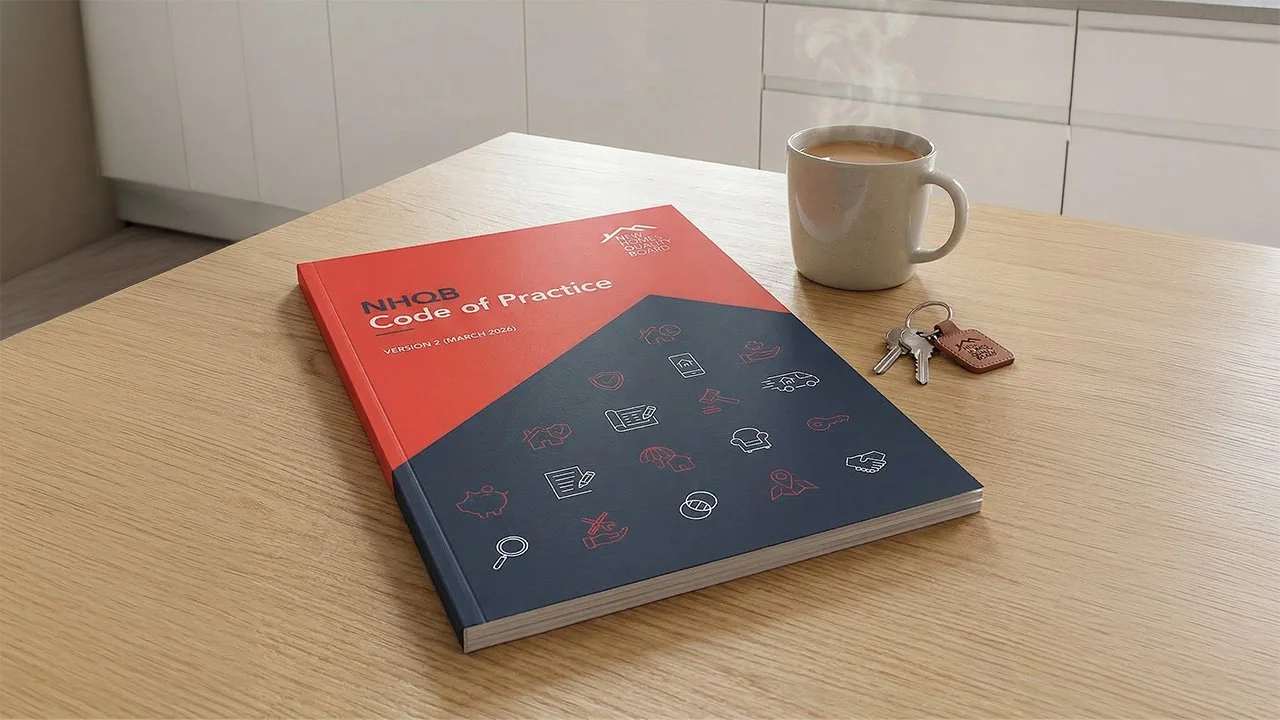
What Is the New Homes Quality Code?
The New Homes Quality Code is a code of practice that sets out the standards registered developers must meet when selling new build homes. It covers everything from marketing and sales through to legal completion and after-sales care. Developers who register with the NHQB agree to comply with the Code and accept the decisions of the New Homes Ombudsman Service. If you reserve a home from a registered developer, you’re protected by the Code from the point of reservation and for two years after legal completion.
The NHQB committed to reviewing the Code every three years, and this second edition is the result of that process, following extensive consultation with consumer groups and other stakeholders.
Key Changes That Affect You as a Buyer
Pre-Completion Inspections: More Options, but a Word of Caution
One of the most notable changes concerns pre-completion inspections. Under Version 1, the Code was designed around the involvement of a professional inspector. Version 2 retains your right to appoint a professional, but now also gives you the option of carrying out the inspection yourself using the NHQB’s Pre-Completion Inspection Checklist, which can be downloaded from their website.
This change was introduced in response to feedback that some buyers found the cost of hiring an independent inspector to be a barrier. However, the Code is clear that the checklist was designed to be used by professionals, and that if you carry out the inspection yourself, you may miss issues or interpret requirements differently to how an expert would. Our own data shows that the average new home has in excess of 140 defects, and many of these are the kind of issues that only a trained eye would catch.
The updated Code also introduces more specific requirements for third-party inspectors. Any inspector you appoint must now be a member of a recognised professional association experienced in residential surveying services, such as CABE, CIOB, ICWCI, RICS, or RPSA. They must also hold relevant professional indemnity insurance and only work within their competency. This is good news for buyers, as it creates a clearer distinction between professional snagging services and less regulated alternatives.
Importantly, Version 2 also clarifies that where issues identified during a pre-completion inspection breach warranty technical standards, the developer is responsible for addressing them, ideally before legal completion or within 30 days if this is not possible. This gives greater weight to the findings of your snagging inspection.
Stronger Protections Against High-Pressure Sales Tactics
The Code has always prohibited high-pressure selling, but Version 2 strengthens these protections in meaningful ways. If you attend a time-bound sales event such as a launch weekend, you must now be given seven days to consider the purchase, even if a promotional incentive would otherwise expire during that period. The incentive itself must be held open for you, although the specific property may still be sold to another buyer if someone else commits first.
Version 2 also introduces a ban on “drip pricing”, a practice where only part of a home’s price is advertised initially, with additional costs revealed gradually as you progress through the buying process. This is now explicitly prohibited as a form of high-pressure selling.
Greater Transparency Around Referral Fees
Both versions of the Code require developers to disclose fees or commissions they receive for recommending professional advisers such as solicitors or mortgage intermediaries. However, Version 2 goes further by specifying exactly what must be disclosed: the nature of the reward, the expected amount, who will receive it, and for what activity. This information must be provided clearly and in writing before you make any commitment.
A More Realistic Affordability Schedule
Under Version 1, developers were required to provide an affordability schedule covering estimated ownership costs over ten years. Version 2 reduces this to five years. While this may seem like a reduction, the change is intended to make cost estimates more realistic and meaningful. Predicting maintenance costs over a decade can be highly speculative, and a five-year horizon is considered more practical for the early stages of home ownership. That said, it’s always wise to carry out your own research into longer-term costs.
Clearer Standards for Sales and Marketing Material
Version 2 expands marketing requirements to explicitly cover visual representations such as photography, CGI, and video, making it clear that these must not be misleading. This reflects the increasing role that CGI images and video walkthroughs play in off-plan sales. Property size must also now be calculated in line with the RICS Code of Measuring Practice, and developers must disclose items not included in the standard specification that a buyer might reasonably expect, such as floor coverings or turf.
Stronger After-Sales Protections
The after-sales provisions have been tightened in several areas. Where remedial work is so extensive that you need to be moved into alternative accommodation, this must now be at the developer’s expense. The developer must also account for any specific needs you have and the expected duration.
Several areas where Version 1 used softer language have been changed to firm requirements. Developers must now settle after-sales issues within 30 days (previously, the Code said they “should” be able to do so), and they must give you monthly updates during any delays.
Tighter Completion Requirements
At the point of completion, developers must now provide you with a formal “Schedule of Incomplete Work (Home)” and, for the wider development, a “Schedule of Incomplete Work (Development)” with estimated timescales. You must also receive the actual warranty documentation, not just a description of the cover. These changes give you a much clearer picture of what remains to be done and what protection you have.
Why a Professional Snagging Inspection Matters More Than Ever
The introduction of a self-inspection option might lead some buyers to wonder whether hiring a professional snagging inspector is still worthwhile. We’d argue it’s more important than ever.
The NHQB itself acknowledges that the pre-completion checklist was designed for professional use and that self-inspecting buyers may miss issues or interpret requirements differently. With the average new home containing over 140 defects, many of which are hidden beneath the surface, a professional inspector brings the training, experience, and diagnostic tools needed to uncover problems you simply wouldn’t spot on your own.
At Brickkickers, our standard inspections go beyond a standard checklist. We include thermal imaging as standard, helping to detect energy efficiency problems, insulation gaps, heating issues, and other hidden defects. Our detailed, photographic reports give you a powerful tool to present to your builder, backed by the expertise of qualified construction professionals.
The fact that Version 2 now requires developers to address issues that breach warranty technical standards, ideally before completion, makes the findings of a professional inspection even more valuable. A thorough, independent report gives you the strongest possible position when negotiating with your developer.
Don’t Leave It to Chance: Book Your Snagging Inspection Today
Buying a new home is one of the biggest investments you’ll ever make. The updated New Homes Quality Code gives you stronger protections, but those protections work best when you have a professional on your side.
Brickkickers has been providing expert snagging inspections nationwide since 2004. Whether you’re approaching legal completion or have already moved in, our experienced inspectors will carry out a thorough examination of your property and provide you with a comprehensive, independent report.
Get in touch today to book your inspection:
Phone: 0845 226 6036
Email: info@brickkickers.co.uk
Your new home deserves the best start. Let Brickkickers help you get the quality you’ve paid for.