
As the heating goes on this autumn, thousands of new build owners will notice windows streaming in the morning, a grey bloom of mould behind a wardrobe, or a bedroom that never quite warms up. The question we hear most at this time of year is a simple one: is this normal, or is it a defect my builder should fix?
It is a question that matters more than ever. Complaints to the New Homes Ombudsman Service more than tripled last year, rising from 593 in 2024/25 to 1,802 in 2025/26, and defects and snagging were the most common reason homeowners complained. In September, the BBC reported on families who had moved out of their new homes altogether because of defects, damp and mould.
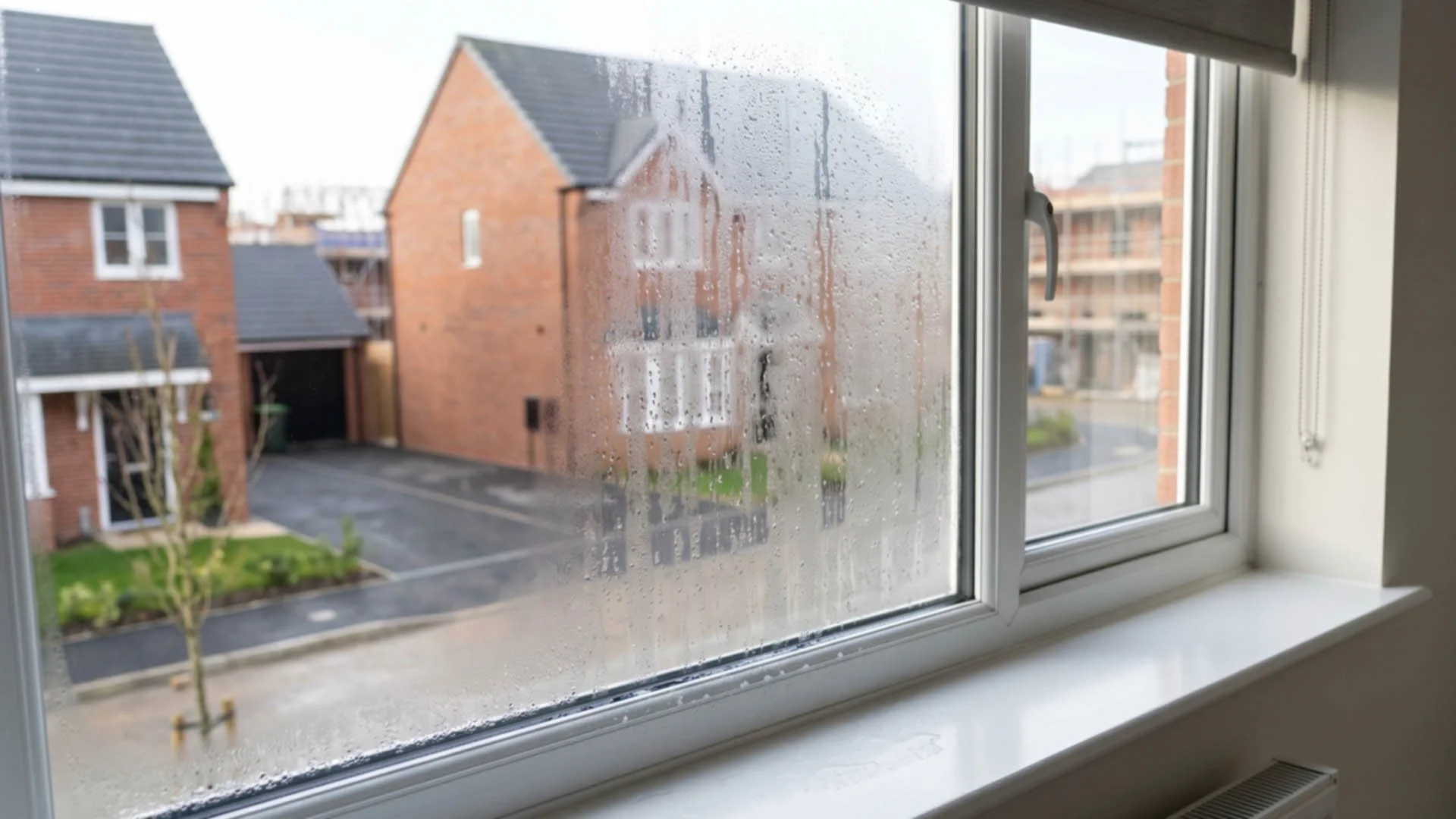
Why new builds are wet in their first winter
Every new home is built with a surprising amount of water locked inside it. Concrete, floor screeds, mortar, plaster and timber all hold moisture when they go in, and much of it is released during the first year or so of occupation. The process speeds up once the heating is switched on, which is why so many owners first notice problems in October and November.
At the same time, modern homes are built to be far more airtight than older properties. That is good news for your energy bills, but it means moisture from the building itself, and from everyday living such as cooking, showering and drying clothes, has fewer ways to escape. When warm, moist air meets a cold surface such as a window pane, an external wall or a room corner, it turns back into water.
The NHBC’s own homeowner guidance on condensation recognises that moisture is released as construction materials dry out, and recommends steady heating and good ventilation during this period. In other words, some condensation in your first winter is expected. The difficulty is knowing where expected ends and defective begins. If you are worried about moisture in your loft, our guide on how to prevent condensation in your new build roof space covers that area in detail.
What is normal in your first winter
Some signs are a normal part of a new home settling in. Condensation on the inside of windows first thing in the morning, which clears once the room is aired, is very common. So is a white, powdery deposit on new brickwork, known as efflorescence, which is salts being drawn out as the bricks dry and usually fades over time.
Fine hairline cracks in plaster, often where walls meet ceilings or around door frames, are typically caused by shrinkage as materials dry out. Our guide to cracks in new build homes explains which cracks are cosmetic and which need a closer look. A slightly musty smell in the first few months, or tiny insects such as plaster mites, can also be signs of a home that is still drying.
Everyday habits that make a real difference
The way you heat and ventilate your home during the first winter has a big effect on condensation. Keep the trickle vents in your window frames open, even in cold weather, as they provide the background ventilation an airtight home relies on. Run your kitchen and bathroom extract fans during and after cooking or showering, and check they have not been switched off at the isolator switch.
Try to avoid drying laundry on radiators or clothes airers indoors. If you have to, use a room with the door closed and a window slightly open, or use a vented or condensing tumble dryer. Heat your home steadily at a moderate temperature rather than in short blasts followed by long cold spells, as cold surfaces attract condensation.
Leave a small gap between large furniture and external walls so air can circulate, keep lids on pans, and keep the loft hatch closed. If your home has a mechanical ventilation system, check it is switched on, set correctly and that the filters are clean. A simple hygrometer costs very little and will show you the humidity in each room, with readings of around 40 to 60 per cent generally considered comfortable.
Warning signs that point to a defect
The key difference between drying out and a defect is the pattern. Normal condensation is spread across the home and improves as the months pass. A defect tends to show up in the same place, again and again, however well you heat and ventilate.
Mould that keeps returning to one spot is the clearest warning sign. External corners, the junction between ceilings and outside walls, window reveals and the back of wardrobes on external walls are common places. Repeated mould in these areas often points to a cold spot caused by missing or slumped insulation, or by a cold bridge where the insulation has not been carried through properly. Missing cavity wall insulation was among the defects highlighted in the ombudsman’s latest annual report.
Damp patches that appear or spread are another concern, particularly on ceilings below bathrooms and en suites, around roof junctions, below windows or at skirting level on the ground floor. These can indicate a leaking pipe or waste connection, failed seals, poor detailing around openings, or moisture getting past the damp proof course.
A room that stays noticeably colder than the rest of the house should never simply be accepted. Rooms above garages and rooms with large areas of external wall are frequent culprits, and the cause is often missing insulation or gaps in the airtightness layer. Draughts around window frames, loft hatches and sockets on external walls tell a similar story, and our guide on how to check insulation in your new build home explains what to look for.
Finally, look at the systems that are meant to control moisture and warmth. An extract fan that does not clear steam may have a disconnected or badly routed duct in the loft, which is a surprisingly common snag. Radiators that stay cold at the top or bottom, underfloor heating zones that never warm evenly, and rooms that cannot reach a comfortable temperature all point to installation or commissioning problems.
When your builder says it is “lifestyle”
It is very common for builders to put winter damp and mould down to lifestyle, meaning the way you heat, ventilate and use your home. Sometimes they are right, which is why the habits above are worth following. But lifestyle advice should not be used to close down a complaint about a home with a genuine defect.
The best response is evidence. Take dated photographs each time the problem appears, and note the conditions at the time, such as whether the heating was on, the trickle vents open and the extract fans running. A simple log of temperature and humidity readings helps too. If mould keeps returning to one wall while the rest of the house stays dry, that pattern is strong evidence that something about that part of the building is different.
An independent report carries far more weight than a homeowner’s word against a site manager’s. A Brickkickers inspection records what is happening, where it is happening and the likely cause, supported by photographs and thermal images, giving your builder a clear list of items to put right. If your complaint stalls, our guide to the new build snagging defect escalation process explains the next steps, and our article on snag time limits sets out how long builders should take.
Why winter is the best time for a thermal imaging inspection
Thermal imaging works by detecting small differences in surface temperature. The greater the difference between inside and outside, the more clearly problems show up, which makes autumn and winter, with the heating on and cold air outside, the ideal time for a thermal survey.
On a cold day, an area of missing or slumped insulation appears as a distinct cold patch on a wall or ceiling. Cold bridging at corners, lintels and window reveals, exactly where mould tends to start, becomes visible, as do air leaks around frames and loft hatches. Damp areas can be picked out for closer investigation, and radiators that need bleeding or balancing, or underfloor heating zones that are underperforming, are easy to spot.
Thermal imaging is included as standard in every Brickkickers snagging report, so you do not need to book or pay for it separately. Where the cause of a problem cannot be confirmed from the surface, our customised and intrusive surveys can, with your consent, open up small areas to establish exactly what is happening behind the plaster, using minimally invasive techniques.
Buying a new build this winter?
If you are due to complete in the coming months, a pre-completion inspection is your best chance to have problems recorded before the home becomes yours. Under NHQB guidelines, your builder will usually give you 10 to 14 days to arrange it, so it is worth booking an inspector as soon as you have a likely date.
A winter pre-completion inspection has a particular advantage, because cold weather makes insulation gaps, cold bridging and heating faults easier to identify. Issues found at this stage can be raised while the developer is most motivated to resolve them. Some problems only appear once a home is lived in, so we also recommend a standard snagging inspection later in your first year.
How Brickkickers can help
Brickkickers has been inspecting new homes across the country since 2004, and research by Coventry University found that the average new home has in excess of 140 defects. Our independent reports are measured against the standards of NHBC, LABC, Premier and all other major warranty providers, so your builder has no room to dismiss them.
If you have already moved in and are within two years of completion, our standard snagging inspection covers the interior and exterior of your home, with thermal imaging included as standard. If you are buying this winter, our pre-completion inspection records defects before legal completion. Where a cold room or recurring mould has led to a dispute with your builder, our customised and intrusive surveys provide the in-depth evidence needed to settle it. Landlords and investors can also rely on our condition reports when tenants raise concerns about damp.
Spotted mould, damp or a room that never warms up? Book a Brickkickers snagging inspection with thermal imaging included as standard, and get the independent evidence your builder needs to put it right while you are still within your two-year warranty period. Call us on 0845 226 6036 or email info@brickkickers.co.uk.