When you buy a freehold house, it is natural to assume that the only regular bills will be your mortgage, council tax and utilities. On many new build developments, however, there is another cost: an annual estate management charge, paid to a private company to look after the roads, green spaces, play areas and drainage that the council or water company has not taken on.
These arrangements are now extremely common. When the Competition and Markets Authority (CMA) studied the housebuilding market, it found that 80% of new homes sold by the eleven largest housebuilders in 2021 to 2022 were subject to estate management charges (CMA, February 2024). The CMA found that the average charge was £350 a year, but also that one-off charges for significant repairs could run into thousands of pounds, and that administration and management fees could make up half or more of the total bill.
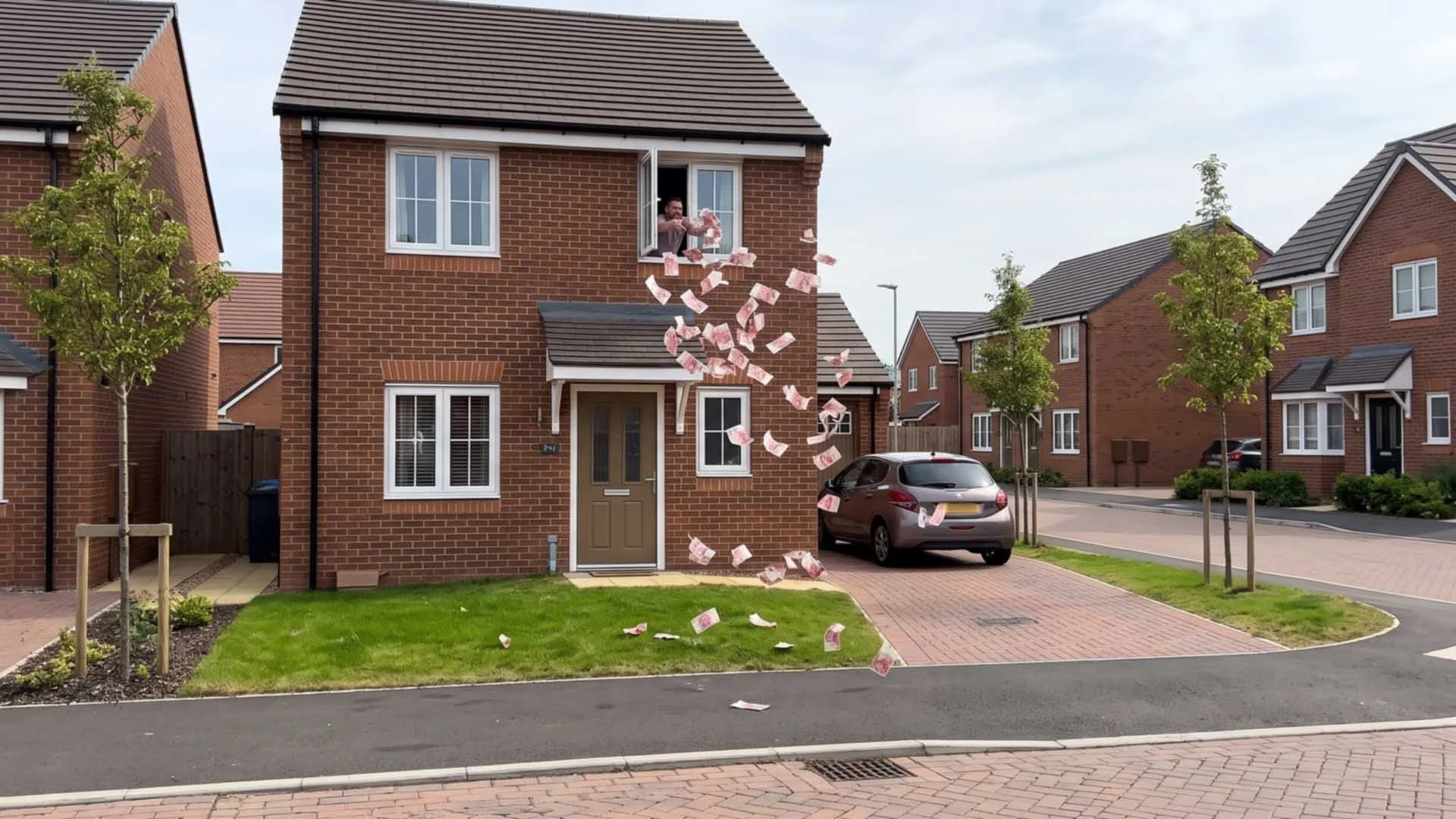
Estate charges are not automatically a bad thing, and on a well run estate they pay for spaces that make the development a pleasant place to live. The problems tend to arise when buyers do not understand what they are signing up to. This guide explains how the arrangements work and what to check before you commit.
What estate management charges pay for
The New Homes Quality Code describes estate charges as the amount owners pay towards the upkeep of communal areas on a development, including services, repairs and maintenance. Typically that might include landscaping and grass cutting, play areas, footpaths, street lighting, private roads, sustainable drainage features such as ponds and swales, and in some cases sewers that have not been adopted.
The charge is usually collected by a management company appointed by the developer. On some estates the homeowners become members or shareholders of the management company over time, while on others the company remains in the hands of a third party. Your obligation to pay is normally written into the legal documents for your home, which is why it is so important to understand it before you exchange contracts.
Why so many estates are not adopted
Traditionally, new roads and sewers were built to an approved standard and then handed over, or adopted, so that the council or water company maintained them at public expense. Roads are usually adopted under an agreement made under section 38 of the Highways Act 1980, and sewers under section 104 of the Water Industry Act 1991.
Increasingly, developers have instead left some or all of these amenities in private ownership, managed by a company and funded by residents. On some estates the plan is for roads and sewers to be adopted once the development is finished and has passed inspection, which can take several years. On others they are intended to stay private permanently.
This difference matters. If an adoption agreement is in place, the amenities should eventually pass to the council or water company. If it is not, you and your neighbours may be paying for their upkeep for as long as you own your home, including the cost of repairs if something was not built well in the first place.
What the developer must tell you before you reserve
If your developer is registered with the New Homes Quality Board, it must follow the New Homes Quality Code. The latest version applies to homes reserved on or after 2 March 2026, and it strengthens the information buyers must receive before they sign a reservation agreement.
Under the Code, the developer must explain how the shared spaces, roads and amenities on the development will be managed, for example by the local authority or a management company. It must also give you an Affordability Schedule setting out costs likely to be associated with the management of your home over the following five years, including estimated management fees for things such as landscaping and roads that the council is not responsible for. The schedule must draw your attention to charges that may increase, or be introduced later, as more facilities are completed, and to any sinking fund charges for future repairs. If the developer does not know the actual amounts, it must still list the costs, even without figures.
Our article on what the updated New Homes Quality Code means for home buyers explains the other changes in more detail. Not every developer is registered, so it is worth checking before you reserve.
The questions to ask before you commit
Start with the basics: is there an estate charge, how much is it, and what does it cover? Ask for the name of the management company, a copy of the current budget, and details of how the charge is calculated and how often it can be reviewed. Ask whether there is a sinking fund or reserve for future repairs, and whether charges are expected to rise as the development is completed.
Then ask about adoption. Are the roads, footpaths, open spaces and sewers intended to be adopted, and if so, are section 38 and section 104 agreements in place? Is there a bond or other security in case the developer fails to complete the work to an adoptable standard? Who will be responsible if adoption never happens?
Finally, ask your conveyancer to look closely at the transfer deed and any covenants. They should explain what you are obliged to pay, what happens if you fall behind, whether you need permission (and pay a fee) to make changes to your home, and whether any other fees apply when you sell. These details can affect the value and saleability of your home, so it is worth taking time over them. Our guide to essential questions every first-time buyer should ask covers other questions worth adding to your list.
How estate quality links to snagging
The condition of shared areas can affect you directly. Poorly laid roads and footpaths, drainage features that do not work properly, and landscaping that fails in the first few years can all lead to repair bills that, on a privately managed estate, may end up being shared between residents.
A snagging inspection focuses on your own home and plot rather than the wider estate, but the boundary between the two is often where problems show up. Drainage that does not cope with heavy rain, gardens that become waterlogged, and drives and paths that settle or crack are all common concerns. Our guides to NHBC Standards for drives, paths and landscaping and new build drainage problems explain what to look out for. Having these issues recorded in an independent report, with photographs, makes it much easier to ask the developer to put them right before responsibility passes to you or the management company.
How the rules are changing
Estate management charges have attracted a great deal of attention from government, and several reforms are in progress. It is important to understand what has actually changed and what is still only planned.
The Leasehold and Freehold Reform Act 2024 contains a new framework intended to give homeowners on freehold estates more rights, including more information about how their estate is managed and the ability to challenge charges they believe are unreasonable. Much of this depends on further regulations, and the government consulted on how to bring it into effect in a consultation on enhanced protections for homeowners on freehold estates, which also asked about removing disproportionate penalties for homeowners who fall into arrears.
A second consultation, on reducing the prevalence of private estate management arrangements, looked at increasing the adoption of roads, drainage and green spaces, introducing common standards for adoptable amenities, and whether adoption of some infrastructure should become mandatory. Both consultations closed on 12 March 2026, and at the time of writing the government has not yet published its response.
In September 2026, the government also announced plans to legislate for powers to cap permission and administration fees, including on privately managed estates, with a consultation to follow on what should be capped and by how much.
Until these changes take effect, the protections available to you depend largely on the terms of your own legal documents, so checking them carefully before you commit remains essential. The proposals above relate mainly to England, and arrangements in Wales and Scotland differ.
If something goes wrong
If you believe the developer did not give you clear and accurate information about estate charges before you reserved, raise it with the developer in writing first. If your developer is registered with the New Homes Quality Board and you are not satisfied with its response, you may be able to take your complaint to the New Homes Ombudsman Service, usually within two years of reservation or completion, whichever is later.
Disputes about the management company's own charges and services may need a different route, so it is worth taking advice from your conveyancer or a solicitor before you act.
Talk to Brickkickers
Buying a new build is a big commitment, and the more you understand before you complete, the fewer surprises you will face afterwards. A pre-completion snagging inspection gives you an independent, detailed report on your new home before it becomes yours, with thermal imaging included as standard. If you have already moved in, a standard snagging inspection can be carried out within the first two years.
You can view our fees and book online, call us on 0845 226 6036 or email info@brickkickers.co.uk.